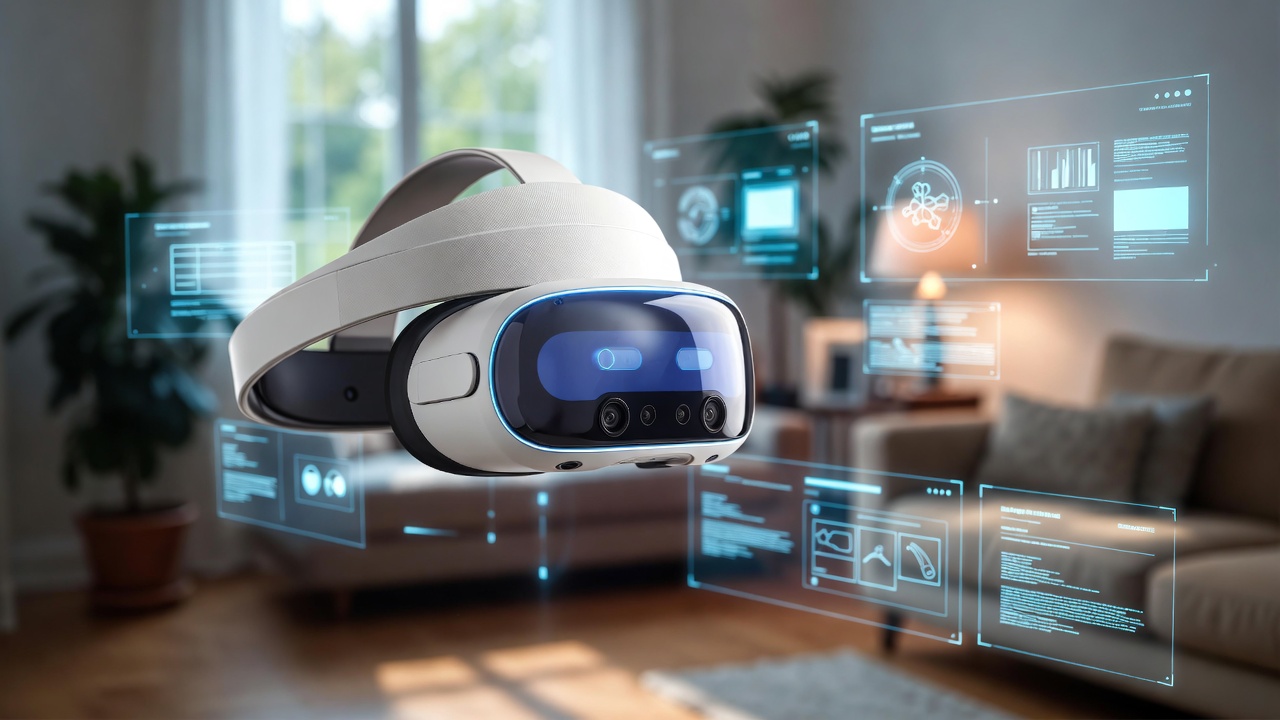
Virtual reality technology has evolved dramatically over the past decade, transforming from a niche experimental concept into a powerful computing platform. At the center of this transformation stands Meta Quest 3, a device that represents a significant leap forward in immersive technology. Designed to deliver both virtual reality and mixed reality experiences in a single standalone headset, Meta Quest 3 demonstrates how digital environments can seamlessly integrate with the physical world.
Unlike earlier VR systems that required complex setups, powerful gaming computers, and multiple sensors, Meta Quest 3 offers an all-in-one solution. It brings advanced graphics, improved comfort, and cutting-edge mixed reality capabilities to everyday users. Whether someone wants to explore immersive gaming worlds, attend virtual meetings, watch cinematic experiences, or create interactive environments, Meta Quest 3 aims to redefine how people interact with digital content.
This article explores every important aspect of Meta Quest 3, including its history, design, specifications, performance capabilities, software ecosystem, and its broader impact on the future of immersive technology.
Biography Table of Meta Quest 3
| Feature | Details |
|---|---|
| Product Name | Meta Quest 3 |
| Manufacturer | Meta Platforms |
| Category | Standalone Virtual Reality & Mixed Reality Headset |
| Release Year | 2023 |
| Operating System | Meta Quest Operating System |
| Processor | Qualcomm Snapdragon XR2 Gen 2 |
| Display Resolution | Approximately 2064 × 2208 pixels per eye |
| Display Type | LCD with pancake lenses |
| Tracking System | Inside-out tracking with advanced sensors |
| Controllers | Touch Plus Controllers |
| Mixed Reality Capability | Full-color passthrough with depth sensors |
| Storage Options | 128GB and 512GB variants |
| Connectivity | Wi-Fi, Bluetooth |
| Primary Use Cases | Gaming, mixed reality apps, productivity, entertainment |
The Evolution of the Quest Series
The release of Meta Quest 3 represents the third major generation in Meta’s standalone VR lineup. The journey began with the Oculus Quest, which introduced wireless virtual reality without the need for a computer. Later, Quest 2 refined the concept by improving performance and affordability, becoming one of the most widely adopted VR headsets in history.
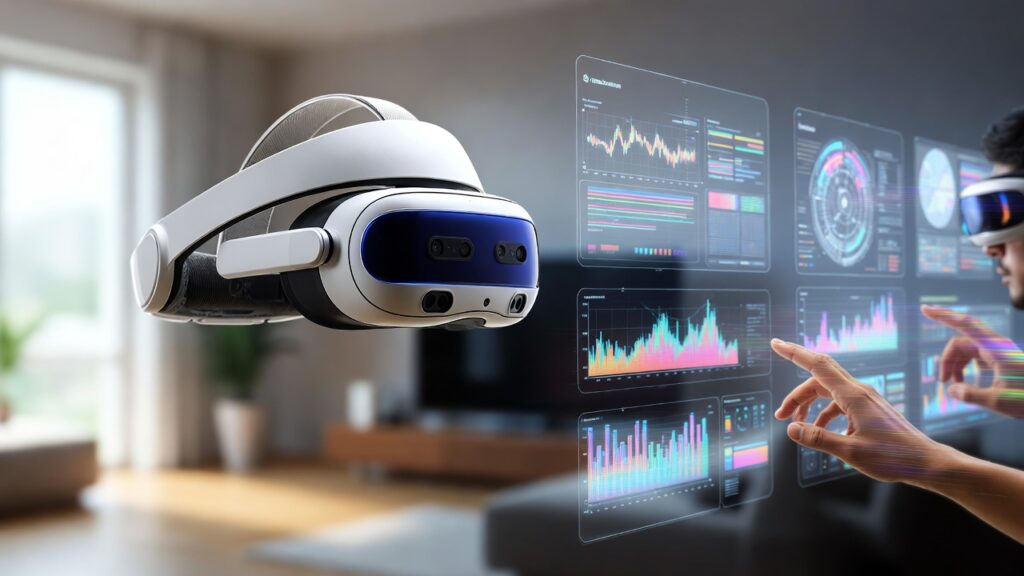
However, Meta Quest 3 takes a different approach by focusing heavily on mixed reality technology. Rather than simply placing users inside a virtual world, the device allows digital objects to appear naturally within the real environment.
This shift signals a broader transformation in immersive technology. Instead of VR being limited to gaming or isolated experiences, Meta Quest 3 expands the platform into areas such as education, productivity, design, and communication.
Design and Build Quality
One of the first things users notice about Meta Quest 3 is its refined and compact design. Compared with earlier models, the headset is noticeably slimmer and lighter. This improvement is largely due to the introduction of pancake lenses, which reduce the distance between the display and the user’s eyes.
The headset features a smooth white exterior with multiple embedded sensors and cameras across the front panel. These sensors enable advanced tracking and mixed reality functionality.
Comfort has also been significantly improved. Meta Quest 3 includes adjustable head straps and balanced weight distribution, allowing users to wear the device for longer sessions without fatigue. Ventilation systems help maintain airflow, preventing overheating during intense gameplay or extended work sessions.
Display Technology and Visual Experience
Visual quality plays a crucial role in immersive experiences, and Meta Quest 3 introduces major improvements in this area. Each eye receives a display resolution exceeding 2000 pixels, resulting in sharper images, reduced screen-door effect, and improved clarity for both text and detailed environments.
The pancake lens technology used in Meta Quest 3 offers several advantages:
Higher clarity
The lenses provide improved optical performance, delivering sharper visuals across a wider field of view.
Reduced headset size
Because pancake lenses require less depth than traditional Fresnel lenses, the overall device becomes thinner and more comfortable.
Better edge-to-edge sharpness
Users experience clearer visuals not only at the center but across the entire display area.
These advancements allow Meta Quest 3 to deliver a more realistic and visually immersive environment.
Performance and Processing Power
At the core of Meta Quest 3 lies the Qualcomm Snapdragon XR2 Gen 2 processor. This chip is specifically designed for extended reality devices and offers a major performance boost compared with earlier generations.
The processing capabilities of Meta Quest 3 enable:
- More detailed environments
- Advanced lighting and shadows
- Faster loading times
- Improved physics simulations
The headset also supports enhanced graphics rendering techniques that allow developers to create visually complex worlds without sacrificing performance.
This increase in computational power ensures that Meta Quest 3 can handle both demanding VR games and sophisticated mixed reality applications.
Mixed Reality Capabilities
Perhaps the most groundbreaking feature of Meta Quest 3 is its mixed reality functionality. Using high-resolution color passthrough cameras and depth sensors, the headset can display the real world while overlaying digital objects on top of it.
This technology allows users to interact with virtual content in their physical space.
For example, users can:
- Place virtual screens around their room
- Play games that interact with real furniture
- Design digital objects within physical environments
- Watch movies on large virtual displays
The mixed reality system in Meta Quest 3 represents a shift toward spatial computing, where digital information becomes integrated with the real world rather than isolated within a virtual environment.
Controllers and Interaction
The Meta Quest 3 comes with redesigned Touch Plus controllers that provide precise motion tracking and responsive feedback.
Unlike earlier controllers that relied heavily on external rings for tracking, the new controllers feature a more streamlined design while maintaining accuracy. This results in a more natural and comfortable grip.
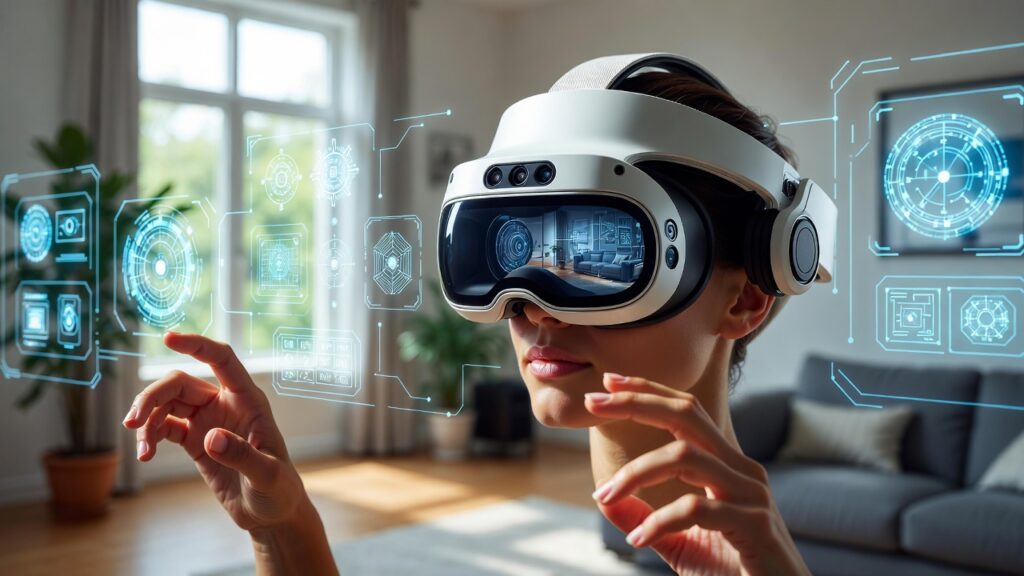
Additionally, Meta Quest 3 supports hand tracking technology. This allows users to interact with menus, apps, and virtual objects using only their hands, eliminating the need for controllers in certain scenarios.
Hand tracking opens new possibilities for productivity apps, creative tools, and intuitive user interfaces.
Gaming on Meta Quest 3
Gaming remains one of the primary reasons people purchase Meta Quest 3, and the device offers a vast library of immersive titles.
Popular genres include:
- Action and adventure games
- Rhythm and music experiences
- Simulation and sports games
- Puzzle and exploration adventures
The improved processing power of Meta Quest 3 allows developers to create richer environments and more dynamic gameplay mechanics.
Additionally, users can connect the headset to a gaming PC through wireless streaming, enabling access to high-end VR titles that require more graphical power.
Productivity and Professional Applications
While gaming often receives the most attention, Meta Quest 3 also serves as a powerful productivity tool.
Professionals can use the headset for:
- Virtual workspaces with multiple screens
- Collaborative meetings in immersive environments
- 3D modeling and design
- Remote training simulations
For example, architects can visualize buildings in three dimensions, engineers can examine mechanical components from every angle, and educators can create interactive learning environments.
These capabilities demonstrate how Meta Quest 3 is expanding beyond entertainment into professional use cases.
Entertainment and Media Consumption
Another major advantage of Meta Quest 3 is its ability to deliver immersive entertainment experiences.
Users can watch movies on enormous virtual screens, explore 360-degree documentaries, or attend virtual concerts and events. The headset transforms ordinary rooms into private theaters, providing a cinematic viewing experience without the need for physical displays.
Streaming services and media platforms increasingly support immersive formats designed specifically for Meta Quest 3, making the headset an appealing option for entertainment enthusiasts.
Software Ecosystem
The success of any hardware platform depends heavily on its software ecosystem. Fortunately, Meta Quest 3 benefits from a rapidly growing library of applications.
The Quest platform includes:
- Thousands of games
- Educational experiences
- Social virtual worlds
- Creative tools
- Fitness programs
Developers are continuously creating new content that leverages the mixed reality features of Meta Quest 3, ensuring the platform remains dynamic and engaging.
Comfort, Battery Life, and Usability
Comfort and usability are essential for extended immersive experiences. Meta Quest 3 offers improvements in both areas.
The headset provides better weight distribution, making it easier to wear for longer periods. Adjustable straps allow users to customize the fit according to their preferences.
Battery life varies depending on usage but generally supports several hours of continuous activity. Optional accessories and external battery packs can extend usage time.
User interface improvements also make navigation smoother, allowing people to quickly access apps, settings, and virtual environments.
Security and Privacy Considerations
Because Meta Quest 3 includes multiple cameras and sensors, privacy considerations are important. The device processes spatial data to understand the environment, which helps enable mixed reality experiences.
Meta has implemented various controls that allow users to manage permissions and decide which applications can access certain features.
Users can also configure safety boundaries to prevent collisions with real-world objects while immersed in VR.
The Future of Spatial Computing
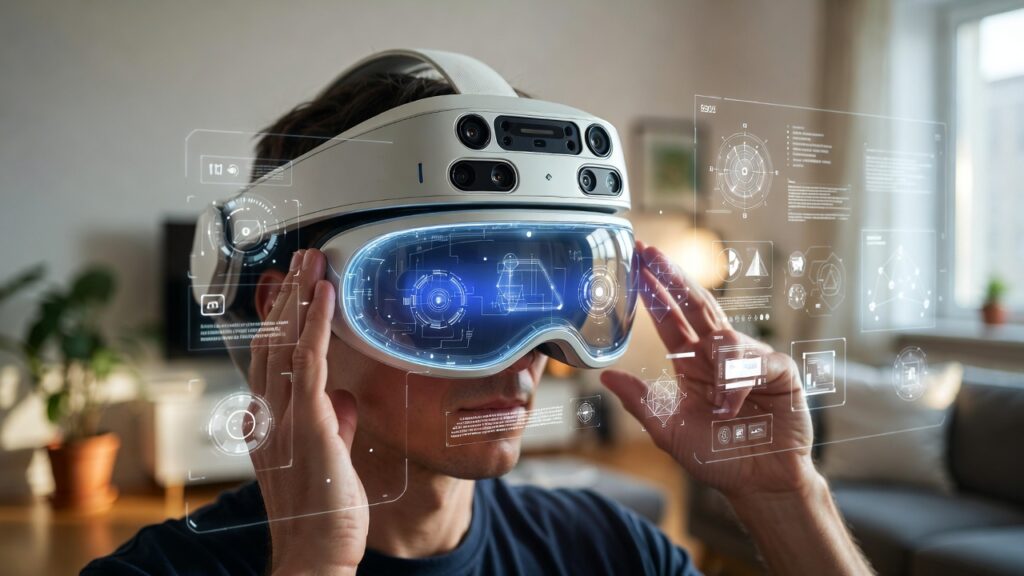
The release of Meta Quest 3 represents more than just another VR headset. It reflects a broader shift toward spatial computing, where digital experiences interact seamlessly with the physical world.
As technology continues to evolve, devices like Meta Quest 3 may eventually become everyday tools for communication, work, entertainment, and education.
Future improvements could include lighter designs, longer battery life, higher resolution displays, and even more advanced mixed reality capabilities.
Deduction
The arrival of Meta Quest 3 marks a pivotal moment in the evolution of immersive technology. By combining high-performance virtual reality with powerful mixed reality features, the headset bridges the gap between digital and physical environments.
From gaming and entertainment to productivity and education, Meta Quest 3 offers a versatile platform capable of transforming how people interact with digital content. Its improved design, advanced processor, high-resolution displays, and intuitive interaction systems create an experience that feels both futuristic and accessible.
As developers continue to explore the potential of spatial computing, Meta Quest 3 stands as one of the most important devices shaping the future of immersive technology.