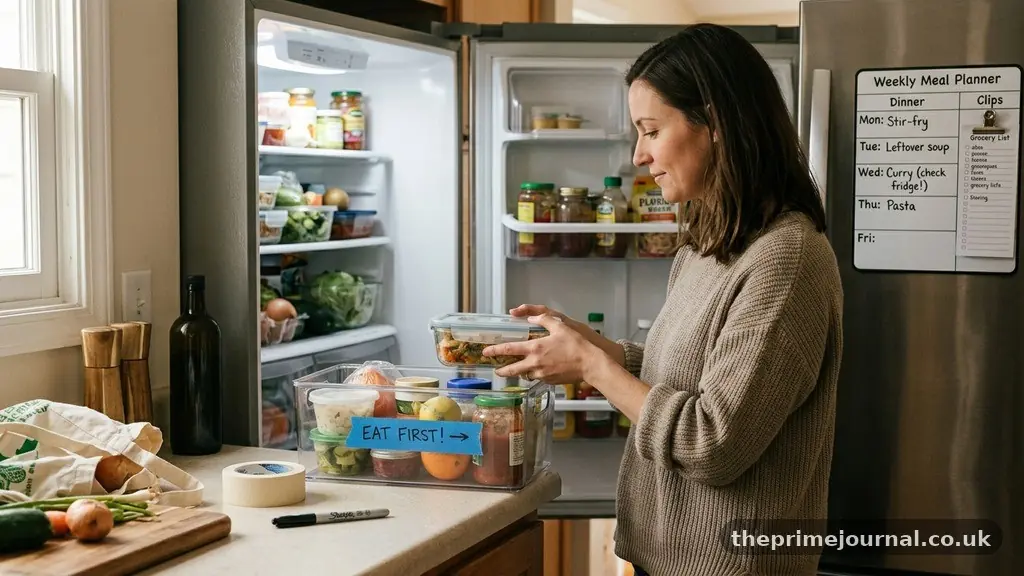
Simple Meal Planning Habits That Help Reduce Food Waste can make everyday cooking calmer, cheaper, and more creative. The goal isn’t to plan a perfect menu or cook every meal from scratch; it’s to buy food with a purpose, store it sensibly, and give ingredients enough flexibility to be used before they spoil.
A few minutes spent checking the kitchen inventory, choosing adaptable meals, and writing a realistic shopping list can prevent forgotten vegetables, duplicate purchases, and abandoned leftovers. The practical ideas below show how small decisions, repeated each week, turn food waste reduction into a manageable household routine.
Start With a Quick Kitchen Inventory
The most useful meal planning often begins before you open a recipe app. Look through the refrigerator, freezer, and cupboards, then note what needs attention first. A soft pepper, an opened carton of cream, or cooked rice from yesterday should influence the next meal more than a recipe that requires buying six new ingredients.
Keep the inventory simple enough to maintain. You might divide a note into three areas: use soon, available staples, and stored for later. “Use soon” could include leafy greens, berries, fresh herbs, or an opened package, while staples might include rice, pasta, canned tomatoes, beans, and spices.
Dates deserve a calm, informed approach. A best-by date generally relates to quality rather than an automatic safety deadline, while foods with a use-by date require closer attention and should be handled according to the label and local food-safety guidance. The USDA explanation of food product dating is a useful reference for interpreting common labels.
Make the inventory visible. A small whiteboard on the refrigerator, a shared phone note, or a paper list beside the pantry can work better than a sophisticated system nobody checks. The habit matters more than the format.
Use FIFO Without Making It Complicated
First in, first out, often shortened to FIFO, means placing older food where you’ll see it before newer purchases. Put the newly bought yogurt behind the older containers, move yesterday’s leftovers to the front shelf, and store newer cans behind older ones with similar dates.
This arrangement turns visibility into a prompt. You don’t have to remember every purchase because the food most likely to be forgotten appears first when you open the refrigerator or cupboard.
Plan Around Ingredients, Not Seven Perfect Meals
A rigid menu can create waste when plans change. Instead, choose a small group of ingredients that can move across several meals. A tray of roasted vegetables might become a grain bowl on Monday, a filling for wraps on Tuesday, and part of an omelet or soup later in the week.
Think in combinations rather than fixed recipes. If you buy cilantro for tacos, plan another meal that uses it, such as a bean salad, salsa, or rice bowl. The same approach works with half a cabbage, a bunch of spinach, cooked chicken, or a jar of tomato sauce.
Flexible recipes are especially helpful in households with unpredictable schedules. A basic soup can accept carrots, beans, lentils, greens, or leftover meat, while a stir-fry can absorb small quantities of several vegetables. This gives ingredients a second chance instead of making one missing item a reason to abandon dinner.
Choose two or three anchor meals, then leave space for leftovers and improvisation. For example, you might plan a sheet-pan dinner, a lentil curry, and a pasta dish while reserving one evening for leftovers. That is more realistic than assigning a completely different recipe to every night.
Planning should reflect the number of people who will actually eat. If one family member travels on Wednesday, reduce that night’s portions or select a meal that freezes well. Accurate expectations are a form of portion control, not a restriction.
Build a Reusable Meal Pattern
A weekly pattern can reduce decision fatigue without making meals boring. One household might use Monday for leftovers, Tuesday for tacos, Wednesday for a slow-cooked meal, Thursday for a quick skillet, and Friday for freezer food. The ingredients change, but the structure stays familiar.
Patterns also make shopping easier. You can estimate how many fresh vegetables, protein options, and grains are needed before choosing specific recipes, which reduces impulse buying and duplicate ingredients.
Write a Shopping List That Matches Real Life
A shopping list is most effective when it follows the kitchen inventory and the weekly plan. Write the quantity and intended use, not just the ingredient name. “Three carrots for soup and one for snacks” is more useful than “carrots,” particularly when you are trying to avoid buying a large bag without a plan.
Separate the list by store area or food type if that helps you move efficiently. Fresh produce, refrigerated foods, pantry goods, and freezer items can be grouped together. A shorter, more specific list makes it easier to notice when an attractive offer doesn’t suit your actual meals.
Be cautious with bulk purchases. A lower unit price isn’t a saving if half the product spoils. Bulk buying works best for shelf-stable foods, frequently used freezer items, or ingredients that can be divided and frozen soon after purchase.
Check package sizes against your household’s consumption. A large bag of salad may look convenient, but a smaller quantity could be the better choice if only one person eats leafy greens. Conversely, a larger bag of rice or dried beans may be sensible because those foods store well and fit many meals.
- Check the refrigerator, freezer, and pantry before shopping.
- Write the meal or purpose beside ingredients that spoil quickly.
- Buy only the amount your household can reasonably use.
- Choose substitutes for ingredients that are unavailable or overpriced.
- Leave room for one flexible meal made from food already at home.
Shopping after eating can also help reduce impulse purchases, although the bigger protection is a written plan. If an unplanned item enters the basket, give it a specific role before leaving the store.
Use Portion Control to Prevent Leftovers From Becoming Waste
Large servings often create more leftovers than people want to eat. Start with modest portions and let people take seconds, especially when serving foods such as pasta, rice, mashed potatoes, or casseroles that are easy to overestimate.
Portion control doesn’t mean everyone receives the same amount. Children, athletes, and adults with different appetites may need different servings, and people should be able to adjust. The practical objective is to reduce uneaten food left on plates, where it usually cannot be saved safely or appealingly.
Measure unfamiliar foods once or twice to improve your judgment. If a recipe produces eight servings but your household typically eats four, divide the recipe before cooking or freeze half immediately. A smaller pan can also prevent a thin, overcooked dish created by trying to halve a recipe incorrectly.
Serve components separately when possible. Keeping sauce, grains, vegetables, and toppings apart allows people to build portions they are likely to finish. It also makes the leftovers more adaptable for the next meal.
Give Leftovers a Planned Destination
Leftovers are easier to use when they have a scheduled moment. Label a container “Tuesday lunch” or set aside one evening for a leftovers buffet rather than expecting everyone to remember what is available.
Change the presentation if enthusiasm fades. Roast chicken can become a sandwich filling, soup ingredient, or salad topping; cooked vegetables can go into quesadillas, frittata, or grain bowls. A different texture, sauce, or serving format often makes familiar food feel new.
Cool and refrigerate leftovers promptly in shallow containers, and follow local food-safety advice for storage times. If you know a dish won’t be eaten soon, freeze it while it is still appealing rather than waiting until the final day.
Use Batch Cooking and Meal Prep Selectively
Batch cooking can reduce waste when it matches your schedule. Cooking a large pot of beans, grains, soup, or tomato sauce makes sense if you have several planned uses. Preparing five complete identical meals may not work if your household loses interest after the second serving.
Consider batch-prepping components instead. Wash and dry greens, cook a grain, roast a tray of vegetables, or mix a versatile dressing. These building blocks can support several meals without forcing every dinner to taste the same.
Protect prepared ingredients from drying out or absorbing odors. Use appropriately sized food storage containers, remove excess air from freezer bags where practical, and allow hot food to cool according to safe handling practices before long-term storage. Clear labels should include the food and the date it was stored.
Freezer storage works best when portions are useful. Freeze soup in single-meal containers, bread in slices, and grated cheese in small bags rather than creating one solid block that is difficult to divide. Leave appropriate headspace for foods that expand as they freeze.
Keep a simple freezer list. Without one, frozen food can disappear behind newer purchases and become a second pantry of forgotten ingredients. Record the item and approximate quantity, then cross it off when used.
Choose Foods That Freeze Well
Soups, stews, cooked beans, many sauces, bread, tortillas, and some casseroles usually tolerate freezing well. Watery salad greens, creamy sauces that may separate, and crisp raw vegetables can change texture, so they are often better used fresh.
Freezing is not a rescue plan for every ingredient. It works best when you decide early, portion the food clearly, and have a realistic opportunity to thaw and eat it.
Store Food So the Plan Survives the Week
Good storage extends the value of a meal plan. Keep herbs in a suitable container or water-filled jar when appropriate, store produce according to its needs, and avoid cramming the refrigerator so tightly that air cannot circulate. A crowded shelf can hide food until it is too late.
透明 containers or clear glass dishes make leftovers easier to spot than opaque tubs. If you prefer opaque containers, label them immediately. The few seconds spent writing “chickpea curry, Tuesday” can prevent a mystery container from being ignored.
Place foods that need attention at eye level. Fresh berries, opened deli meat, cooked grains, and cut fruit should not be buried behind condiments. The front of the refrigerator is valuable visual space, so reserve it for food with a short window of freshness.
Storage also includes serving decisions. Keep dressings, crunchy toppings, and delicate garnishes separate from food that will be saved. A salad stored without dressing may remain useful for another meal, whereas a dressed salad often becomes soggy and unappealing.
Use a weekly five-minute reset. Move older items forward, check the freezer list, wipe spills, and identify one ingredient that needs a plan. This small maintenance task is easier than confronting a refrigerator full of forgotten food at the end of the month.
Turn Extra Ingredients Into Flexible Meals
Food waste reduction becomes easier when “extra” ingredients are treated as prompts rather than problems. A few mushrooms can join scrambled eggs, pasta, or soup; a half-used cucumber can become a salad, yogurt sauce, or quick pickle. The best use depends on freshness, quantity, and what else is already available.
Create a short list of rescue meals your household genuinely enjoys. Fried rice, vegetable soup, loaded baked potatoes, omelets, quesadillas, pasta with vegetables, and grain bowls can absorb small amounts of food without requiring an exact recipe.
Keep flavor-building staples available. Stock, canned tomatoes, eggs, beans, tortillas, pasta, rice, lemons, garlic, and spices can connect unrelated ingredients into a coherent meal. This is more useful than collecting specialty ingredients that only suit one recipe.
Use herbs and stems creatively where appropriate. Soft herbs can be blended into sauces, sturdy stems can flavor stock, and citrus zest can add brightness before the fruit is juiced. Not every part of every food is edible, but a quick check can reveal useful portions that might otherwise be discarded.
Separate quality concerns from safety concerns. A wrinkled carrot may be perfectly usable after trimming, while mold, unusual odors, leaking packages, or unsafe storage conditions call for caution. Never taste food to decide whether it is safe.
Make Substitutions Before You Shop
Substitution protects a plan from unnecessary purchases. Use spinach instead of kale in a cooked dish, beans instead of meat in a chili, or a different grain in a bowl if the recipe’s flavor and cooking method allow it.
Write likely substitutions beside recipes you use often. That small note makes flexible cooking easier on a busy evening and reduces the temptation to buy one ingredient for a single dish.
Measure Progress Without Chasing Perfection
Tracking food waste for one week can reveal patterns that memory misses. Keep a note of what gets thrown away, why it happened, and whether the quantity was small or substantial. Common reasons include buying too much, forgetting an item, cooking excessive portions, and losing interest in planned meals.
Use the results to adjust one habit at a time. If salad greens regularly spoil, buy less, plan an earlier salad, or choose sturdier greens. If cooked rice accumulates, cook a smaller batch or freeze portions on the day you make it.
| Waste pattern | Likely planning adjustment | Practical example |
|---|---|---|
| Fresh produce spoils unopened | Buy a smaller quantity and assign a meal | Purchase one bunch of herbs for salsa and soup |
| Leftovers remain untouched | Schedule a leftovers meal and change the format | Turn roasted vegetables into wraps or a frittata |
| Duplicate pantry items appear | Check inventory before shopping | Move older cans forward and update the list |
| Batch-cooked food becomes repetitive | Prepare components instead of identical meals | Cook plain grains and vary sauces and toppings |
Success does not require an empty bin every week. Some waste is unavoidable, including inedible peels, bones, spoiled food caused by illness or travel, and mistakes. The useful measure is whether your purchasing, storage, and cooking decisions are improving over time.
Include other household members in the process. Let one person check the freezer, another plan a leftovers night, and children choose a meal that uses a food nearing its best-by date. Shared responsibility makes the routine less dependent on one person remembering everything.
FAQ
How far ahead should I plan meals?
Planning three to five days ahead is enough for many households. It gives you direction without locking you into a menu that may not suit changing schedules, appetite, or food freshness.
What should I do with leftovers nobody wants?
Rework them into a different meal if the food has been stored safely, such as turning cooked vegetables into soup or a filling. If nobody wants the food after one planned reuse, freeze a suitable portion or accept that discarding it is safer than keeping it indefinitely.
Is batch cooking always good for reducing waste?
No. Batch cooking helps when the quantity matches your household and the food has several planned uses. Preparing too much of one meal can create waste if people become tired of it, so component-based meal prep is often more adaptable.
How can I remember what is in the freezer?
Keep a paper list on the freezer door or a shared digital note. Record the food, quantity, and storage date, then review the list during your weekly meal planning session.
Do best-by dates mean food must be thrown away?
Not automatically. Best-by dates commonly indicate expected quality, but the product’s storage history, appearance, smell, packaging condition, and any use-by instructions also matter. Follow food-safety guidance and discard food that shows signs of spoilage or has been handled unsafely.
Make the Habit Easy to Keep
The strongest simple Meal Planning Habits That Help Reduce Food Waste are small enough to repeat: check what you own, plan flexible meals, shop with quantities in mind, store food visibly, and give leftovers a definite destination. Start with one change, such as a weekly inventory or a designated leftovers night.
After a few weeks, adjust the routine to fit your household rather than copying someone else’s system. When meal planning reflects real appetites and schedules, food waste reduction becomes less about discipline and more about making thoughtful use of what is already there.