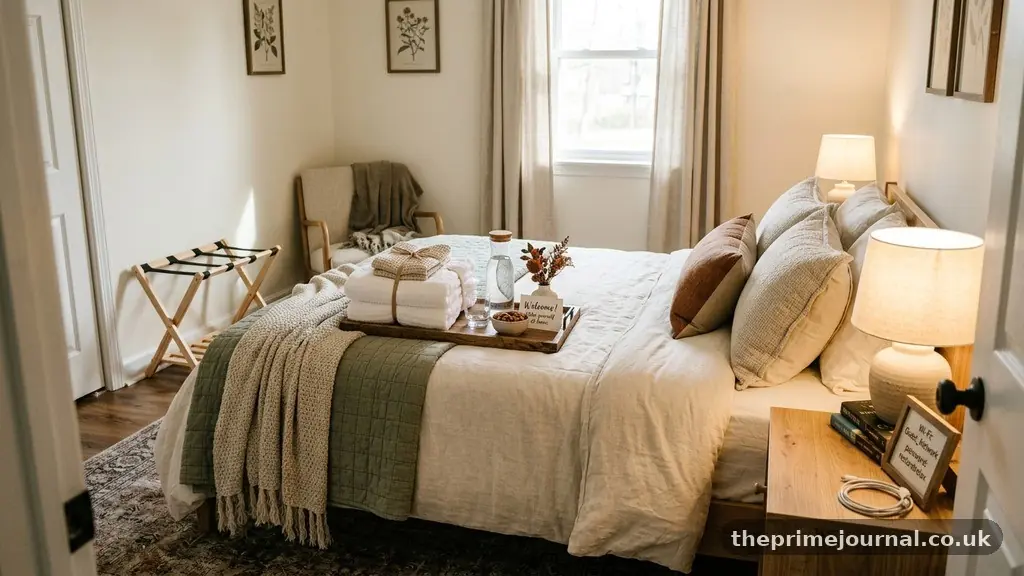
Simple ways to make your guest room more welcoming often begin with comfort rather than decoration. Clean bed linens, a clear place for luggage, useful lighting, and a few thoughtful supplies can make visitors feel settled within minutes of arriving.
A welcoming room doesn’t need expensive furniture or a dramatic redesign. The best changes remove small inconveniences, respect different sleeping habits, and add personal touches that show your guest was expected.
Start With Comfort and Convenience
The quickest answer is to make the room clean, calm, easy to use, and ready for real life. Prioritise comfortable bedding, a supportive pillow choice, clear luggage space, practical lighting, and access to the items a visitor might otherwise feel awkward asking for.
Begin by removing anything that doesn’t serve the guest. Exercise equipment, unopened boxes, laundry piles, and decorative objects taking up surface space make a bedroom feel borrowed rather than prepared.
Fresh air also changes the first impression. Air the room before arrival, empty the wastebasket, check for unusual smells, and wash curtains or cushion covers if they have absorbed cooking odours or pet scents.
Walk through the room as if you have never been there before. Can someone find the light switch at night, open the closet, charge a phone, and reach the bathroom without stepping over a suitcase?
A small bedside table is one of the most useful additions. Leave enough room for glasses, a phone, a book, and a glass of water rather than covering it with ornaments.
Make the basics visible without making the space look like a hotel reception desk. A folded note can point out the Wi-Fi details, bathroom location, heating controls, and anything unusual about the house.
- Clear one surface beside the bed for personal belongings.
- Leave a simple route from the door to the bed and bathroom.
- Provide a power outlet or charging point within easy reach.
- Place spare toilet paper, tissues, and drinking water where guests can find them.
- Check that every lamp, drawer, window latch, and door lock works properly.
The strongest guest room decor is often quiet and useful. A framed print, a plant, or a small vase can add warmth, but the room should still feel open enough for someone to unpack and make it their own.
Make the Bed Feel Genuinely Inviting
The bed is the room’s main promise, so comfortable bedding deserves more attention than decorative accessories. Use clean, well-fitting sheets and a duvet or blanket suited to the season, then add one lighter layer so guests can adjust without searching through cupboards.
Bed linens should feel fresh rather than merely look tidy. Check for rough fabric, loose elastic, stains, and fabric softener residue, since some visitors may have sensitive skin or dislike strongly scented laundry products.
Offer choices instead of guessing. Two sleeping guests may have completely different preferences, and a spare blanket folded at the foot of the bed gives both people more control over their room temperature.
Extra pillows are helpful when they serve different purposes. A firm pillow, a softer option, and a couple of cushions for reading provide flexibility without forcing the guest to sleep surrounded by a pile of decorative pillows.
Choose layers for the season
Summer visitors may need breathable cotton, a thin cover, and a fan, while winter guests may appreciate a heavier duvet and warm socks placed in a drawer. Avoid making a guest hunt for these items in an unfamiliar home.
Mattress comfort matters, too. If the mattress is very firm or noticeably soft, a clean topper can improve the experience, although it should never hide a sagging or damaged bed that needs replacing.
Use a mattress protector beneath the sheet and wash it regularly. This protects the bed while helping guests feel confident that the sleeping area is hygienic and cared for.
Support restful sleep
Noise is harder to control than bedding, but you can reduce its impact. Close doors gently, keep household appliances away from the room, and provide earplugs in a small dish if the home is near traffic or a busy communal area.
Room temperature deserves a clear solution. A note explaining the heating or cooling controls is more useful than assuming visitors will understand an unfamiliar thermostat.
For practical sleep advice, the Sleep Foundation’s bedroom environment recommendations offer helpful background on light, noise, and temperature. You don’t need to recreate a specialist sleep space; a dark, quiet, comfortable bed is a strong starting point.
Use Light and Privacy to Create Calm
Lighting affects whether a room feels restful or harsh. Aim for several gentle sources rather than relying on one bright ceiling fixture that leaves the room feeling exposed at night.
A reading lamp beside the bed is especially valuable. It lets one person read or check a phone without lighting the whole room, and a switch within reach means nobody has to cross a dark floor after getting into bed.
Soft lighting can come from a shaded table lamp, a wall light, or a warm-toned bulb. Avoid bulbs that cast a cold blue glare, particularly if the room is intended for sleeping rather than working.
Daylight is welcome during the morning, but guests may not share your preferred waking time. Blackout curtains, lined blinds, or a simple sleep mask allow someone to sleep later after a long journey or an evening event.
Check the curtains from the bed rather than from the doorway. A narrow gap beside the window can let in a surprising amount of streetlight, and a mirror opposite a bright window may make the room feel less private.
Privacy also includes sound and visibility. If the room faces a neighbour’s window or a busy path, sheer curtains combined with heavier drapes can provide daytime coverage without making the space gloomy.
Keep cords tidy and secure. A reading lamp with a trailing cable across the walkway creates a trip hazard, especially for an older guest arriving after dark.
Give visitors control
Small controls matter because they reduce the need to ask for help. Label unusual switches, explain how to operate blinds if they are unfamiliar, and make sure guests can open a window safely if the room becomes warm.
Don’t assume that a smart bulb or complicated remote is an improvement. Straightforward switches are usually more welcoming than technology that requires an app, a password, or a tutorial.
A night-light near the floor or outside the bathroom can be useful without disturbing sleep. Choose a low-level light rather than leaving a bright landing fixture on all night.
Make Storage and the Bathroom Easy to Use
Guests feel more settled when they can unpack instead of living from a suitcase. Clear at least part of the closet space, remove personal clothing from the most accessible section, and leave several hangers at a reachable height.
A luggage rack prevents suitcases from blocking the bed or marking the floor. If you don’t have one, a sturdy bench or clean, stable chair can work, provided it can safely support the bag.
Leave drawers partly empty and dust-free. Visitors don’t need a huge wardrobe, but they do need somewhere to put sleepwear, chargers, and small items without balancing everything on the floor.
The bathroom should feel equally prepared. Supply fresh towels in a visible stack, including a bath towel, hand towel, and washcloth for each person staying.
Toiletries are most useful when they cover forgotten essentials rather than creating clutter. Travel-size shampoo, conditioner, soap, toothpaste, and a spare toothbrush can sit in a tray or basket where visitors can see them.
Check the shower pressure, hot-water supply, drain, and lighting before the guest arrives. A beautiful bathroom feels unwelcoming if the water takes ten minutes to warm or the floor stays slippery.
Place a clean bath mat on a dry floor and provide hooks for used towels. Guests shouldn’t have to guess whether a towel is intended for them or search for somewhere to hang it.
Anticipate practical needs
A covered wastebasket, tissues, a hairdryer, and a plunger within reasonable reach solve minor problems discreetly. You can keep less attractive supplies in a cabinet, but tell the guest where essential items are kept.
If the bathroom is shared, make the arrangement clear before bedtime. A brief explanation about water use, door locks, or morning routines prevents embarrassment and helps visitors plan.
Accessibility begins with honest information. Mention stairs, narrow doorways, a high bed, or a step into the shower before arrival, so guests can decide whether the room suits their needs.
| Guest-room feature | Basic preparation | Extra thoughtful touch |
|---|---|---|
| Closet | Clear shelves and add hangers | Leave a drawer and a lint roller |
| Bedside area | Provide a table and working lamp | Add charging access and water |
| Bathroom | Set out fresh towels and soap | Add toiletries and a non-slip bath mat |
| Luggage | Provide a clear floor area | Add a luggage rack or sturdy bench |
Add Personality Without Taking Over
A room becomes memorable through personal touches, but those touches should welcome the visitor rather than display the host’s entire collection. Choose a few pieces with a connection to the home, local area, or guest’s interests.
A framed map, a small piece of artwork, or flowers from the garden can give the room character. Keep surfaces usable, and avoid fragile objects that guests must move before placing down a phone or cup.
A welcome basket can be simple and specific. Bottled water, tea, coffee, fruit, crackers, or a small chocolate bar are useful after travel, especially when the guest arrives after nearby shops have closed.
Food choices should account for allergies and preferences. If you aren’t sure what someone eats, choose sealed, clearly labelled items and ask in advance rather than filling the basket with products they cannot use.
Local information makes the room feel connected to its surroundings. A printed card with nearby breakfast options, pharmacy details, public transport information, and emergency contacts is more useful than a generic pile of tourist leaflets.
For children, consider a small night-light, a few age-appropriate books, and space for a travel cot if needed. For a colleague, reliable Wi-Fi, a clear workspace, and an accessible outlet may matter more than decorative cushions.
Match the room to the visit
An anniversary guest might appreciate flowers or a handwritten note, while a friend staying for a week may value a larger empty drawer and a spare key. The most meaningful detail is often the one that responds to the reason for the visit.
Use scent carefully. Strong candles, diffusers, and fragranced sprays can trigger headaches or allergies, so clean air and unscented laundry are safer choices for a room shared with different people.
Plants can soften a room, but only choose one that tolerates the available light and doesn’t shed leaves onto the bed. A small, healthy plant is better than a crowded collection that creates maintenance work.
Decor should leave room for the visitor’s identity. A guest should be able to bring in a suitcase, hang a coat, and place a book down without feeling that they are disturbing a carefully staged display.
Prepare the Room Efficiently on Any Budget
You don’t need to buy everything at once. Start with hygiene, sleep, lighting, and storage, then add decorative details after the practical problems have been solved.
Wash the bed linens, clean the floor beneath the bed, dust the top of the wardrobe, and inspect corners for cobwebs. These jobs take time rather than a large budget, yet they strongly affect whether the room feels cared for.
Repurpose items thoughtfully. A clean wooden stool can become a bedside table, a basket can hold towels, and a folding chair can provide luggage support if it is stable and doesn’t crowd the walkway.
Spend money where replacement is difficult. A worn mattress, broken blind, or unreliable lamp is more important than a new decorative print.
A practical preparation order
- Remove clutter and make a clear route through the room.
- Clean the bed, floor, surfaces, windows, and wastebasket.
- Test lamps, outlets, heating, windows, and door locks.
- Set out bedding, towels, toiletries, and drinking water.
- Add a few personal details that suit the visitor.
- Do a final walk-through from the guest’s point of view.
A final walk-through catches details that are easy to overlook. Lie on the bed to check the view and lighting, sit at the desk if there is one, and open the closet to see whether your own belongings dominate the space.
Ask a trusted friend for honest feedback if the room rarely hosts visitors. Someone unfamiliar with the room may notice a missing mirror, confusing switch, or awkward step that you no longer see.
Avoid Common Guest Room Mistakes
Too many cushions, ornaments, and signs of personal storage can make a room look polished in photographs but uncomfortable in use. Guests need somewhere to put their belongings more than they need a decorative arrangement on every surface.
Don’t hide necessities in an obscure cupboard. Spare blankets, towels, and toiletries should be easy to find, with a brief note if their location isn’t obvious.
Overheating is another frequent problem. A thick duvet, sealed window, and strong heater can make sleep unpleasant, so combine seasonal bedding with ventilation and clear temperature controls.
Noise deserves an honest assessment. If the room is above a kitchen, beside a staircase, or near a barking dog, explain that before arrival and offer practical options such as earplugs or an alternative sleeping area.
Strong fragrances can also undermine comfort. Freshness should come from clean fabrics and ventilation, not a heavy room spray that masks odours and lingers on clothing.
Check safety without making the room feel institutional. Smoke alarms should work, walkways should stay clear, rugs should lie flat, and electrical cables should not run where someone could trip.
Respect different habits
Some guests read in bed, some wake early, and others need complete darkness. Flexible bedding, separate lamps, blackout curtains, and a little storage allow people to use the room according to their own routines.
Privacy also means not entering the room without permission during the stay. Agree on whether you will provide fresh towels, tidy the space, or leave visitors undisturbed until they ask for assistance.
Don’t take a guest’s preference personally. A visitor who asks for another pillow or turns down the heating isn’t criticising your hospitality; they are giving you useful information that can make the remainder of the stay better.
FAQ About a Welcoming Guest Room
What should every guest room include?
At minimum, provide a clean bed, comfortable bedding, fresh towels, a working bedside lamp, drinking water, clear luggage space, and access to basic toiletries. A power outlet near the bed and simple instructions for Wi-Fi or heating make the stay easier.
How can I improve a guest room without spending much?
Declutter first, wash all bed linens, clean hidden surfaces, improve the lighting, and leave part of the closet empty. A handwritten welcome note, a glass of water, and a neat stack of towels can feel more thoughtful than expensive decor.
How many pillows should I put on the bed?
Provide enough for sleeping rather than filling the bed with decorative cushions. Two usable pillows per person, ideally with different firmness options, plus one or two spare pillows in the closet gives most guests useful flexibility.
What belongs in a guest welcome basket?
Choose a few sealed, easy-to-eat items such as water, tea, coffee, fruit, crackers, or chocolate. Add a note about ingredients where relevant, and ask about allergies or dietary restrictions before buying anything substantial.
Should I leave personal items in the room?
Keep personal items out of the main storage areas and off the bedside table. A few intentional decorations are fine, but guests should have clear space for clothing, luggage, chargers, and belongings they want nearby.
Make the Room Ready for a Real Person
The best simple ways to make your guest room more welcoming focus on how the space works after the door closes: can someone sleep comfortably, find what they need, control the temperature, and unpack without apology?
Begin with clean bed linens, clear storage, soft lighting, fresh towels, and a few considerate supplies. Then add personal touches that suit the visitor, test the room yourself, and invite honest feedback after their stay.