Everyday Items You Should Organise to Save Time at Home are usually the small things that interrupt your routine: keys, shoes, chargers, food containers, toiletries, paperwork, and cleaning products. Giving these items a consistent home can remove dozens of tiny decisions from an ordinary day.
The biggest gains come from organising items you handle often, not from making every cupboard look perfect. A few practical changes to entryway organisation, kitchen storage, laundry supplies, wardrobe organisation, and digital files can help you leave faster, cook with less searching, and finish household tasks with fewer interruptions.
Start With the Items You Touch Every Day
The best first targets are the objects that move through your hands repeatedly. Keys, wallets, bags, shoes, coats, phones, chargers, water bottles, glasses, medication, and work essentials all deserve a predictable location.
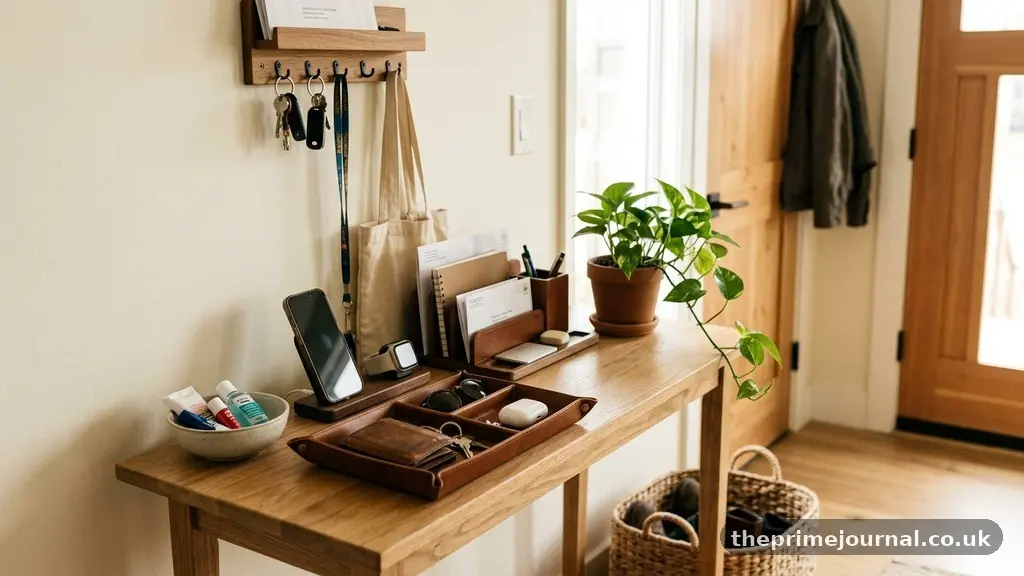
Place a small tray, wall hook, or narrow basket near the main entrance for keys and daily carry items. If several people share the space, assign each person a hook or labelled section rather than creating one communal pile.
A useful rule is simple: organise the items that cause you to stop and search. If you look for your transit card every morning, it matters more than a rarely used serving platter hidden in a cabinet.
Here are high-value starting points for most homes:
- Keys, wallets, sunglasses, and access cards near the exit.
- Shoes and frequently worn coats within easy reach of the door.
- Chargers grouped by device, with spare cables separated from daily ones.
- Reusable shopping bags folded or stored beside the route to the car or front door.
- Water bottles, lunch containers, and coffee equipment together in the kitchen.
- Medicines and daily supplements kept in a safe, clearly designated place.
- Remote controls, reading glasses, and blankets in one living-room basket.
Keep the system visible enough to use without thought. A beautiful box that requires opening another box often fails because the extra step encourages people to leave objects on nearby surfaces.
For families, the goal isn’t rigid perfection. It is reducing friction during the busiest moments, such as the ten minutes before school, work, or an appointment.
Make the Entryway Work Like a Launch Pad
Entryway organisation has an outsized effect on time because the entrance is where several routines meet. People arrive carrying bags, coats, shoes, mail, parcels, and sometimes sports equipment, so the area needs separate destinations for each category.
Use hooks for items that need to be grabbed quickly and a basket or shelf for things that must leave with you. A low shoe rack can prevent footwear from spreading across the floor, while one washable mat contains rain and grit before they travel deeper into the house.
Keep only the current season’s outerwear in the main entry zone. Store heavy winter coats, formal shoes, and rarely used accessories elsewhere so the everyday area remains easy to scan.
A small “outgoing” location is especially useful. Put library books, returns, parcels, permission slips, and items belonging in the car in one basket, but empty it at a fixed time rather than allowing it to become permanent storage.
Try assigning locations by action rather than by object alone:
- Leave the house: keys, bags, shoes, coats, sunglasses, and umbrellas.
- Go upstairs: items that belong in bedrooms or bathrooms.
- Go out: parcels, donations, returns, and borrowed belongings.
- Need attention: letters, forms, and anything requiring a decision.
This arrangement works because it reflects how the entryway is used. You don’t need to remember a complicated filing system while carrying groceries or trying to get out on time.
Do a two-minute reset each evening. Return shoes to the rack, hang coats, place keys in their tray, and move stray objects to the correct basket before the next morning begins.
Organise Food, Containers, and Kitchen Tools
Kitchen organisation can save time at every stage of a meal, from choosing ingredients to washing up afterwards. The most valuable areas are food storage, frequently used tools, food containers, and the refrigerator.
Store everyday plates, bowls, pans, and utensils between waist and shoulder height if possible. Reserve high shelves and deep corners for equipment used only occasionally, such as a roasting pan or seasonal baking mould.
Food containers are a common source of wasted time because mismatched lids create a search problem. Keep containers nested by shape and store lids vertically in a shallow bin or file-style divider so you can see the size you need.
Pantry storage should make the oldest suitable items easy to notice. Group breakfast foods, grains, canned goods, baking ingredients, snacks, and sauces, then place newer purchases behind older ones when you restock.
Refrigerator organisation also affects food waste. Use one shelf or bin for items that need to be eaten soon, and keep similar foods together instead of spreading yoghurt, cheese, and leftovers across several shelves.
| Kitchen item | Useful location | Time saved |
|---|---|---|
| Daily cooking utensils | Open crock or top drawer beside the preparation area | Less searching during meal preparation |
| Food containers and lids | Nested by shape with lids stored upright | Faster packing and leftover storage |
| Breakfast foods | One pantry shelf or basket | Quicker morning decisions |
| Items to eat soon | Clearly visible refrigerator bin | Fewer forgotten leftovers |
| Tea, coffee, and filters | One tray near the kettle or machine | Shorter drink-making routine |
Keep one clear preparation surface whenever possible. A clear counter is not only easier to clean; it gives you an immediate place to set ingredients, unpack groceries, or prepare lunch.
Check the system after cooking a few meals. If you repeatedly walk across the kitchen for a tool, move that tool closer, even if the original arrangement looked more orderly.
Give Clothing and Laundry a Simple Flow
Wardrobe organisation works best when clothing follows the rhythm of your week. The items worn most often should be easiest to see, reach, and put away, while occasional clothing can occupy higher shelves or separate storage.
Arrange clothes by type and then by practical frequency. You might group work shirts, casual tops, trousers, exercise clothing, sleepwear, and formal pieces rather than organising only by colour.
Keep a small hamper or divided laundry basket where clothes are actually removed. If people undress in bedrooms and bathrooms, separate hampers may save more time than one large basket placed far away.
Laundry supplies should be grouped together in a safe, dry location. Store detergent, stain treatment, mesh bags, drying racks, and spare hangers near the washing machine, but keep chemicals inaccessible to young children and pets.
A three-part sorting system can reduce repeated handling:
- Everyday clothing that can be washed in the normal load.
- Delicates, darks, or specialist fabrics that need separate treatment.
- Items requiring repair, stain treatment, air-drying, or donation.
Don’t let the “repair” category become a permanent graveyard. Use a small, visible bag for missing buttons and minor alterations, then review it on a scheduled day each month.
When clothes return from washing, fold or hang them according to where they belong. Storing complete outfit components near each other can make mornings quicker, especially for uniforms, workwear, or children’s school clothing.
Seasonal rotation can help if storage space is limited. Before packing clothes away, remove pieces that no longer fit, feel uncomfortable, or haven’t been worn during the relevant season.
Sort Bathroom and Cleaning Supplies by Use
Bathroom storage should support the order in which a routine happens. Keep daily products such as toothbrushes, cleanser, deodorant, and hair tools within immediate reach, while backup products can sit in a separate cupboard.
Use small trays or drawer dividers to stop bottles and tubes from sliding into one another. A divided drawer makes it obvious when toothpaste, razors, cotton products, or personal-care items need replacing.
Store backups together rather than opening several locations for the same product. A single inventory basket can prevent accidental overbuying while keeping replacements available.
Cleaning supplies also benefit from task-based grouping. Instead of scattering products across rooms, create a safe caddy for bathrooms, another for general surfaces, and a separate area for laundry or floor care.
Never combine cleaning chemicals unless the product instructions explicitly allow it. In particular, avoid mixing bleach with other household cleaners, and follow the storage and ventilation guidance on each label.
A practical cleaning caddy might contain:
- Microfibre cloths separated from disposable wipes.
- A suitable surface cleaner and a bathroom-specific product.
- Gloves, a small scrub brush, and replacement sponges.
- Bin liners or recycling bags for the room being cleaned.
- A written note of products that need replenishing.
Keep the caddy light enough to carry easily. If it becomes overloaded, divide it by room or task so you don’t spend more time sorting supplies than cleaning.
For safety information on household products, consult the U.S. Environmental Protection Agency’s Safer Choice resources. Product labels remain the primary source for correct use, storage, and disposal.
Control Paperwork and Digital Clutter
Paperwork management can prevent small administrative tasks from becoming urgent problems. Mail, school forms, receipts, appointment letters, warranties, and bills should each have a clear next step.
Set up three physical categories: action, filing, and recycling. The action tray is for documents requiring a response, the filing section is for records worth keeping, and the recycling area handles obvious junk once personal information has been removed or destroyed safely.
Don’t create a “miscellaneous” pile without a review date. A weekly fifteen-minute paperwork session is more effective than waiting for a large backlog that requires rereading every document.
Use folders with specific names such as medical, housing, insurance, tax, school, and vehicle. If several household members handle paperwork, add the person’s name only when it genuinely clarifies responsibility.
Digital organisation should mirror the physical system. Create a small number of folders for bills, personal records, household documents, work, and archives, then use descriptive filenames that include the document type and date.
For example, “2025-03 electricity bill” is easier to find than “scan004.” Consistent naming matters more than an elaborate folder tree because search tools work better with words you can remember.
Choose one place for digital downloads and process it on a set schedule. Automatic backups are useful, but they don’t replace a deliberate decision about which files should be kept, shared, or deleted.
Receipts need a purpose before they deserve storage. Keep records connected to warranties, returns, tax requirements, insurance, or business expenses, and discard duplicates once the relevant period has passed.
Use Storage Tools Without Creating More Work
Storage containers, labels, and drawer dividers can save time, but only when they support a clear category. Buying containers before deciding what belongs together often produces attractive clutter in smaller boxes.
Start by removing duplicates, broken items, expired products, and objects that belong elsewhere. This is the practical side of decluttering: less volume means fewer decisions and easier access to what remains.
Choose containers that match the items. Open baskets suit frequently used objects, lidded boxes protect seasonal belongings, clear bins help you identify contents quickly, and shallow trays prevent small items from spreading across a drawer.
Labels are most helpful when several containers look alike or when someone else needs to maintain the system. Use plain words such as “spare cables,” “first aid,” “school supplies,” or “winter accessories.”
Drawer dividers are particularly useful for categories that become mixed during the day. They work well for utensils, socks, stationery, batteries, hair accessories, and small tools.
Before buying an organiser, measure the shelf, drawer, or cupboard. Check the opening as well as the interior dimensions, because a container that fits inside may still be impossible to remove comfortably.
A good storage decision passes three tests:
- You can identify the contents without emptying the container.
- You can return an item with one or two simple movements.
- The container leaves enough room to remove things without disturbing everything else.
Leave some empty capacity. A system filled to the edge becomes difficult to maintain as soon as you buy something new or postpone one return.
Review storage after a month of real use. If the same items keep landing beside a container rather than inside it, either the location is wrong or the category needs to change.
Build Time-Saving Routines Around the System
Organisation saves time only when it becomes part of normal behaviour. The easiest routines attach a small reset to something you already do, such as locking the door, starting the kettle, or brushing your teeth.
A five-minute evening reset can cover the entryway, kitchen counters, living-room surfaces, and tomorrow’s essentials. Put keys away, load or stack dishes, check the outgoing basket, and place work or school items near the exit.
Use a weekly reset for tasks that don’t need daily attention. Review the refrigerator, refill household supplies, process paperwork, empty miscellaneous baskets, and return objects that migrated during the week.
Keep a running shopping list in one location rather than relying on memory. Record an item when it is opened for the last time, not only when it has completely run out.
Time-saving routines should account for other household members. A labelled shelf, colour-coded hook, or simple picture label can make the correct action obvious without repeated reminders.
When introducing a new system, change one zone at a time. Organising the kitchen, hallway, laundry area, and paperwork simultaneously can create temporary chaos and make it difficult to identify what actually helped.
Measure success by behaviour, not appearance. Ask whether you can find the item faster, put it away without thought, finish a routine with fewer steps, or avoid buying a duplicate.
If a system fails, treat that as useful information rather than a personal failure. The container may be too far away, the category may be too broad, or the item may need a more visible home.
Frequently Asked Questions
Which household items should I organise first?
Begin with items you use daily and frequently misplace, such as keys, shoes, chargers, bags, food containers, toiletries, and paperwork requiring action. These create repeated delays, so organising them usually produces a faster benefit than sorting rarely used possessions.
How can I organise a home without buying many products?
Use what you already have first: mugs can hold small tools, shoeboxes can separate shelves, jars can collect stationery, and reusable bags can group soft items. Decluttering and assigning fixed locations often solve the main problem before storage containers become necessary.
What is the best way to organise a small entryway?
Prioritise vertical space with hooks, a narrow shelf, or a compact shoe rack. Keep only current-season items there, and use one basket for outgoing objects such as returns, library books, and parcels.
How often should household organisation be reviewed?
Review high-use areas weekly and larger storage areas every few months or at seasonal changes. A quick review is also useful after a move, a change in work schedule, a new baby, or any change that affects what the household uses every day.
How do I stop organised spaces from becoming messy again?
Make the correct place easier to use than the wrong one. Keep frequently used items visible, avoid overfilled containers, and connect a short reset to an existing routine such as locking up at night or preparing breakfast.
Make the Next Ten Minutes Easier
Everyday Items You Should Organise to Save Time at Home are the objects that repeatedly slow you down, not necessarily the possessions that look untidy in photographs. Start with one high-traffic area, give each category a reachable home, and remove anything that makes returning an item awkward.
Begin tonight with keys, tomorrow’s clothes, food containers, and one paperwork tray. Small changes in home organisation can create calmer time-saving routines, and you can adjust each system as your household’s needs change.