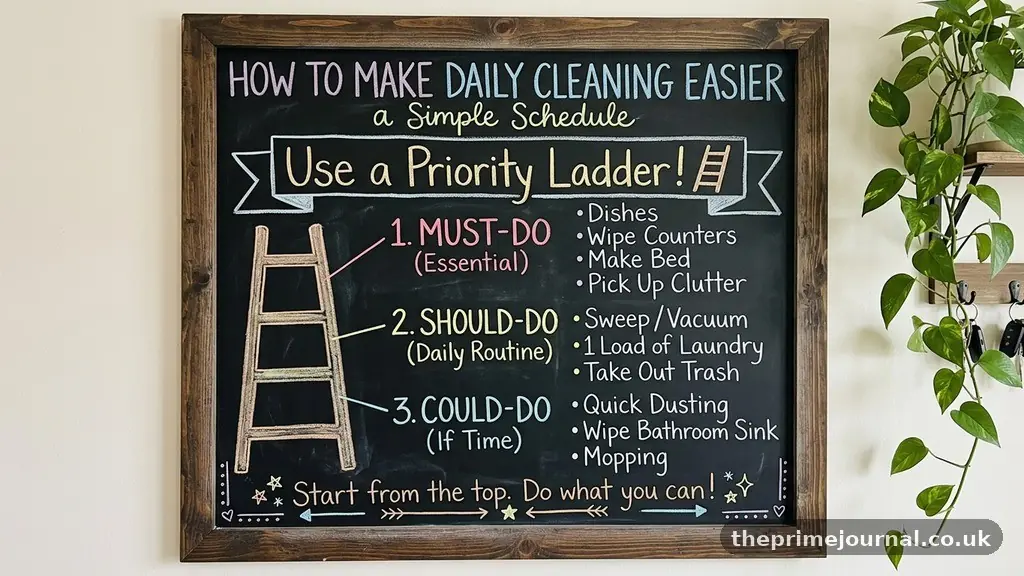
Making Daily Cleaning Easier With a Simple Schedule starts with reducing the number of decisions you make each day. A short cleaning routine can keep dishes, laundry, clutter, dust, and bathroom mess from turning into a weekend-long project, even when your home is busy.
The most useful approach is simple: handle a few daily chores, assign one focused task to each day, and leave room for real life. You’ll find a practical daily cleaning schedule below, along with room-by-room methods, time-saving cleaning tips, and ways to adjust the plan for your household.
Start With a Small Daily Plan
The answer is to divide cleaning into three layers: a quick daily reset, one focused task, and a weekly catch-up period. Most homes don’t need every surface cleaned every day; they need high-traffic areas kept under control and larger jobs spread across the week.
A useful daily cleaning schedule might take 20 to 30 minutes in total, divided into short bursts rather than one uninterrupted session. For example, you could spend ten minutes after breakfast clearing the kitchen, five minutes in the afternoon putting items away, and ten minutes before bed resetting the main living areas.
- Morning: Make the bed, open curtains, put dirty clothes in the hamper, and unload the dishwasher if it finished overnight.
- After meals: Clear plates, wipe the table and counters, rinse the sink, and start or load the dishwasher.
- Late afternoon: Return shoes, bags, toys, mail, and other loose items to their usual places.
- Evening: Do a floor check, fold visible blankets, take out rubbish if needed, and prepare the kitchen for the next morning.
The key is to clean according to frequency, not guilt. Food preparation areas, sinks, and rubbish need regular attention, while skirting boards, windows, and detailed dusting can wait for a weekly or monthly slot.
Keep the first version deliberately modest. If your schedule requires an hour every day, it may be too demanding to survive a hectic Tuesday, a sick day, or an unexpected evening commitment.
Choose Tasks That Match Your Home
Not every room creates the same kind of mess, so your cleaning routine should follow how your household actually uses the space. A kitchen used for three meals a day needs more frequent attention than a spare bedroom that is opened once a week.
Begin by identifying the areas that affect comfort and hygiene most quickly. These are usually the kitchen, the main bathroom, the entryway, and the room where people gather in the evening.
Traffic matters more than square footage. A small hallway can need daily vacuuming if it collects outdoor grit, while a large formal dining room may only need a quick weekly dust and floor clean.
Use a priority ladder
Place tasks into three groups: must do, helpful to do, and occasional. The must-do group might include washing dishes, wiping food spills, managing rubbish, and dealing with wet bathroom floors.
Helpful tasks include dusting living-room surfaces, vacuuming visible crumbs, changing towels, and sorting paperwork. Occasional work includes cleaning inside cupboards, washing walls, polishing fixtures, and moving furniture to reach hidden dust.
This approach prevents a common mistake: spending twenty minutes polishing a low-use surface while dirty dishes and damp towels remain untreated. A home feels cleaner faster when you deal with visible, high-use problems first.
Give every item a home
Cleaning becomes slower when objects have nowhere to go. A basket near the stairs, a tray for keys, and a dedicated drawer for chargers can remove repeated decisions from the evening reset.
Decluttering doesn’t mean emptying every cupboard. It can be as small as removing expired food from one shelf, recycling a stack of old papers, or donating clothes that have stayed unworn through an entire season.
Use the rule that the storage location should be close to where the item is used. If shoes always pile up by the door, a low basket or shoe rack there is more practical than expecting everyone to carry them to a distant wardrobe.
Build a Ten-Minute Reset
A short reset is the centre of an effective plan because it stops small messes from accumulating. Set a timer for ten minutes and work in one direction through the space rather than moving randomly from room to room.
In the living room, begin by collecting cups, wrappers, books, toys, and clothing. Put away what belongs nearby, then place anything from another room in a basket so you can return it in one trip.
Next, straighten cushions and blankets, clear the coffee table, and wipe any sticky marks. There is no need to deep-clean the room during this reset; the aim is to restore order and make the next cleaning job easier.
The kitchen usually deserves its own reset after dinner. Scrape plates, load the dishwasher, wash items that cannot go inside, wipe the counters, and rinse the sink so dried food does not become tomorrow’s problem.
If you have a few minutes left, sweep obvious crumbs from the floor. Mopping can remain on a scheduled day unless there has been a spill or the floor feels visibly sticky.
Try habit stacking
Habit stacking means attaching a small chore to something you already do. You might wipe the bathroom counter while your child brushes their teeth, fold laundry while listening to a podcast, or empty the dishwasher while coffee brews.
The existing habit acts as a reminder, so you don’t need to rely on motivation. Keep the added task small enough that it doesn’t disrupt the activity supporting it.
For example, cleaning the shower screen while waiting for conditioner to work may be realistic, but scrubbing the entire bathroom during that same pause is not. A manageable action repeated often is more valuable than an ambitious task attempted once.
Use visible stopping points
Decide what “finished” means before you begin. A ten-minute kitchen reset might end when the sink is empty, the counters are wiped, and food is stored, even if the cupboard doors still need attention.
Stopping points protect your time and prevent cleaning from expanding into an exhausting, never-ending project. They also make it easier for other household members to help because the expected result is clear.
Follow a Room-by-Room Rhythm
Room-by-room cleaning works best when each area has a short list of repeatable actions. You don’t need a separate complicated system for every room; you need a few reliable sequences that reduce backtracking.
Kitchen cleaning
Daily kitchen cleaning should focus on food contact surfaces and moisture. Clear rubbish, wash dishes, wipe counters, clean visible spills on the floor, and give the sink a quick rinse or scrub.
Once or twice a week, clean the stovetop, microwave interior, cabinet handles, and appliance fronts. Check the refrigerator for spoiled food before grocery shopping so expired items don’t occupy space or create odours.
Keep a small cloth and suitable surface cleaner near the kitchen rather than storing every supply in a distant cupboard. Easy access makes it more likely that someone will wipe a spill immediately.
Bathroom cleaning
After showers, encourage household members to remove excess water from glass or tile with a squeegee if the surface allows it. Hang towels fully open, keep the floor clear, and wipe toothpaste from the basin before it dries.
Schedule a more thorough bathroom cleaning once or twice a week, depending on use. Clean the toilet, basin, shower or bath, mirror, handles, and floor in that order, working from less dirty surfaces toward more contaminated ones.
Never mix cleaning products unless the label specifically says they are compatible. In particular, products containing bleach should not be combined with acids or ammonia-based cleaners because dangerous fumes can form.
Bedrooms and living spaces
Bedrooms usually stay manageable when beds are made, clothes go directly into a hamper or wardrobe, and bedside surfaces receive a weekly dust. Vacuuming frequency should reflect pets, allergies, children, and the amount of outdoor dirt entering the room.
In living spaces, clear surfaces before dusting so you don’t clean around objects. Dust from higher surfaces toward lower ones, then vacuum or sweep the floor after particles have settled.
Entryways and utility areas
The entryway controls how much dirt travels through the rest of the home. A washable mat outside or inside the door, a place for shoes, and a hook for bags can reduce the cleaning burden far more than repeated sweeping.
Laundry areas benefit from a simple laundry routine: check pockets, sort only when necessary, run full loads where practical, and move finished clothes promptly. Damp laundry left in the machine can create an unpleasant smell and force you to repeat the wash.
Assign One Focused Task to Each Day
A weekly rotation keeps deeper work from competing with daily chores. Assigning one category to each day also means you can stop after that category is done instead of searching the house for more tasks.
| Day | Focused task | Practical examples |
|---|---|---|
| Monday | Floors | Vacuum high-traffic areas, sweep the kitchen, and mop hard floors if needed. |
| Tuesday | Bathrooms | Clean the toilet, basin, mirror, shower or bath, and bathroom floor. |
| Wednesday | Dusting | Dust shelves, lamps, picture frames, skirting boards, and reachable vents. |
| Thursday | Bedrooms | Change bedding, clear bedside tables, and vacuum bedroom floors. |
| Friday | Kitchen detail | Clean the stovetop, microwave, cabinet handles, and refrigerator shelf. |
| Saturday | Flexible catch-up | Handle laundry, decluttering, errands, or the task missed earlier in the week. |
| Sunday | Reset | Restock supplies, check the calendar, and prepare the home for Monday. |
This table is a framework, not a contract. If Wednesday is your busiest day, move dusting to a quieter evening or combine it with another short task.
Floors may need more attention in a home with pets, muddy weather, or young children. Conversely, a smaller household with little outdoor traffic may only need thorough vacuuming once or twice a week.
Use a house cleaning checklist with no more than five tasks for a focused session. A short list makes progress visible and prevents the discouragement that comes from writing down every possible cleaning job in the home.
Make Supplies Faster to Use
The best cleaning supplies are the ones you can find immediately and use safely. Keep basic products together in a labelled caddy, but store specialist products according to their safety instructions and away from children or pets.
A practical caddy might include microfiber cloths, disposable or reusable gloves, a non-abrasive cleaner, a glass cleaner, a small brush, and rubbish bags. You may also want separate cloths for toilets, kitchens, and general surfaces to avoid transferring grime.
Use the correct product for the material. Natural stone, finished wood, stainless steel, painted surfaces, and delicate fixtures can react badly to strong or acidic cleaners, so read the label and test an unfamiliar product in a hidden spot.
For safety information and help identifying products designed with safer ingredients, consult the U.S. Environmental Protection Agency’s Safer Choice program. No cleaner replaces ventilation, careful storage, and following the manufacturer’s directions.
Improve the order of work
Clean from top to bottom so dust and crumbs fall onto surfaces you haven’t finished. Work from dry tasks to wet tasks, then leave floors until the end whenever possible.
Carry a basket for items that belong elsewhere. Instead of making repeated trips, gather everything first and return the objects in one pass after the main room is tidy.
Use a fresh section of a cloth as it becomes dirty, and wash reusable cloths regularly. A cloth that only spreads grease will make a surface look streaky and force you to repeat the job.
Reduce equipment clutter
You don’t need a separate gadget for every surface. A dependable vacuum, a broom or dry mop, a bucket, washable cloths, and a few suitable cleaners can handle most routine household work.
Too many products create another maintenance task. Check supplies once a week and replace only what is actually running low.
Adjust the Schedule for Busy Days
A sustainable schedule needs a minimum version for difficult days. When time is tight, focus on food, hygiene, rubbish, and anything that could stain, smell, or become unsafe if left overnight.
Your minimum reset might be washing or loading dishes, wiping the kitchen counter, putting wet towels on rails, collecting rubbish, and clearing one walkway. That is enough to protect tomorrow’s routine without pretending that every day has equal energy.
On a normal day, add one focused task. On a high-energy day, you can complete two, but don’t make the larger effort the new daily expectation.
Share the work clearly
Household members are more likely to help when jobs are assigned specifically. “Clean the house” is vague, while “empty the dishwasher and wipe the dining table after dinner” gives a clear action and a clear finish line.
Children can handle age-appropriate tasks such as putting toys in bins, matching socks, carrying lightweight laundry, or wiping a low table with supervision. The purpose is participation and routine, not perfect results.
Adults can divide jobs by time, room, or responsibility. One person might handle kitchen cleaning while another manages laundry, but responsibilities should be revisited if one category consistently takes much longer.
Recover after missed days
Don’t restart by attempting every missed task at once. Begin with rubbish, dishes, laundry that needs immediate attention, and clear surfaces in the busiest room.
Then return to the schedule at the next available point. A missed Wednesday does not mean the entire plan has failed; it means the flexible catch-up slot has a purpose.
Keep a note of what caused the disruption. If mornings are regularly rushed, move the dishwasher task to the evening or ask another household member to own it.
Turn Cleaning Into a Repeatable Habit
Consistency comes from reducing friction, not from demanding perfect discipline. Put the hamper where clothes actually land, keep a bin near the desk, and store frequently used cloths close to the mess they address.
Use visual reminders sparingly. A small checklist on the refrigerator or a recurring phone reminder for bathroom cleaning can help while the routine is new, but too many alerts quickly become background noise.
Pair cleaning with natural transitions. The end of breakfast can signal the kitchen reset, arriving home can signal the shoe-and-bag routine, and switching off the television can signal the living-room tidy.
Review the plan after two weeks. Notice which tasks are genuinely necessary, which take longer than expected, and which are being skipped because they belong at an inconvenient time.
A schedule should serve the household rather than judge it. If mopping every Tuesday is unrealistic, change it to a quick spot-clean during the week and a fuller floor clean when the home has more time.
Measure success sensibly
The goal is not a display-home finish at every hour. Success might mean waking to a usable kitchen, finding clean towels, keeping floors safe, and avoiding a stressful pile of jobs at the weekend.
Look for practical results: fewer dried spills, less searching for lost items, shorter weekend cleaning sessions, and a home that can receive an unexpected visitor without a frantic rush.
Allow for seasons and events. School holidays, guests, illness, moving furniture, and severe weather can all change the amount of work required, so a good system must bend without breaking.
Frequently Asked Questions
How long should daily cleaning take?
For many homes, a focused daily reset takes 20 to 30 minutes, but the right amount depends on household size, pets, children, and the condition of the home. Split the time into several short sessions if one long block feels difficult.
What should I clean every day?
Prioritise dishes, food preparation surfaces, visible spills, rubbish, bathroom moisture, and items blocking walkways. Dusting, detailed vacuuming, mopping, and deep appliance cleaning can usually follow a weekly or rotating schedule.
Is it better to clean one room a day?
Room-by-room cleaning can work well if you prefer to finish one area completely, but it may leave important daily messes untouched elsewhere. A combination is often easier: reset the kitchen and main living areas daily, then focus on one room or category each day.
How can I keep up when I miss a day?
Use a minimum reset instead of trying to recover everything immediately. Handle dishes, rubbish, laundry that could smell, and essential bathroom or floor issues, then return to the normal schedule rather than doubling the next day’s workload.
What if other people in the home don’t help?
Assign specific tasks with clear finishing points and place supplies where they are used. Start with small responsibilities, such as unloading the dishwasher or taking out rubbish, and explain the standard in concrete terms rather than asking generally for “more help.”
Keep the Routine Light and Useful
Making Daily Cleaning Easier With a Simple Schedule means protecting the tasks that keep your home hygienic and comfortable while letting lower-priority work wait. Start with a daily reset, add one focused job, and adjust the rhythm to match traffic, energy, and household needs.
Try the plan for two weeks, then remove anything that adds pressure without improving your home. A routine that is short, visible, and flexible will serve you better than an ambitious checklist you dread opening.