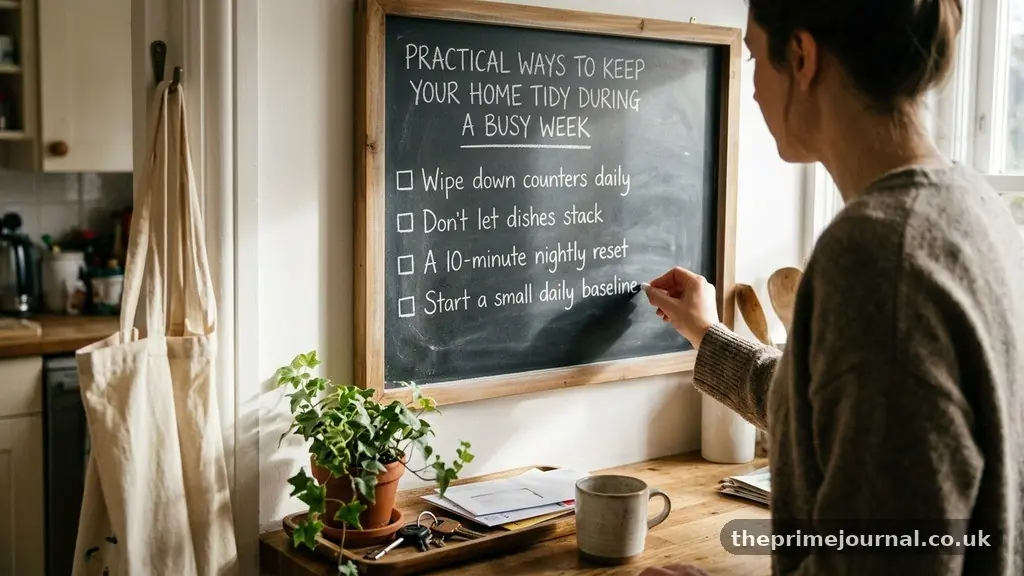
Practical Ways to Keep Your Home Tidy During a Busy Week start with one simple shift: aim for steady maintenance, not a spotless house at every moment. A few well-timed habits can stop dishes, laundry, paperwork, and clutter from becoming a demanding weekend project.
The most effective approach combines short cleaning bursts, sensible storage solutions, and clear priorities for high-traffic areas. You’ll learn how to build a daily cleaning routine that fits around work, school, meals, and rest without making your home feel like another job.
Start With a Small Daily Baseline
The fastest answer is to create a short baseline that happens every day, even on demanding days. Focus on the tasks that most affect how the home feels: clearing kitchen surfaces, putting loose items away, handling obvious rubbish, and resetting the main living area.
A useful baseline can take 10 to 20 minutes rather than an entire evening. It doesn’t need to include deep bathroom cleaning or sorting every cupboard; it simply prevents ordinary mess from accumulating faster than you can manage it.
Choose a reliable point in the day for this work. Some households prefer a kitchen reset after dinner, while others tidy before leaving for work or immediately after children go to bed.
The timing matters less than the cue. Linking the routine to an existing event, such as finishing dinner or starting the coffee maker, makes the habit easier to remember than relying on motivation alone.
Keep the baseline visible and limited to a few actions:
- Return items that have been left in shared rooms.
- Load or wash the most urgent dishes.
- Wipe kitchen counters and the dining table.
- Put dirty clothes into the laundry basket.
- Empty a full rubbish or recycling bin.
- Clear the floor in the main walkway.
This list works because it targets both hygiene and visual clutter. A room can still need dusting, but it will feel under control if its surfaces are usable and its floor is safe to walk across.
On an exhausting night, use a “minimum version” rather than abandoning the routine. Put away food, soak difficult dishes, move clothing to one place, and leave the deeper jobs for a planned session.
That flexible approach protects consistency. Practical Ways to Keep Your Home Tidy During a Busy Week are not about completing every task daily; they’re about preventing small problems from turning into urgent ones.
Use Time Blocks Instead of Waiting for Free Time
Busy households rarely discover a large, empty block of time by accident. A better strategy is to assign small cleaning tasks to existing gaps, such as the five minutes while water boils, the ten minutes before a child’s bedtime, or the quarter-hour after a commute.
This is a form of time management, but it should remain practical rather than rigid. If you schedule a demanding cleaning session at the end of a long workday, the plan may fail before it begins.
Try matching the task to the available energy and time. A short break can handle wiping bathroom sinks, while a higher-energy period may suit vacuuming stairs or changing bed linen.
| Available time | Useful task | What to avoid |
|---|---|---|
| Two to five minutes | Put away items, wipe one surface, or gather rubbish | Starting a whole-room clean |
| Ten minutes | Reset the kitchen, fold a small load, or clean one sink | Opening a cupboard that needs sorting |
| Twenty minutes | Vacuum high-traffic areas or clean a bathroom | Switching between several unfinished jobs |
| Thirty minutes or more | Change sheets, mop floors, or complete a focused decluttering session | Trying to deep-clean the entire home |
Use a timer when you tend to overwork a task. A timer gives you permission to stop, which is important because a realistic routine must leave room for meals, sleep, exercise, and unexpected responsibilities.
One effective pattern is the “one room, one result” rule. During a short block, decide that the kitchen will have clear counters, the bedroom will have a made bed, or the hallway will have an empty floor.
That result creates a visible reward. Finishing one defined outcome feels more satisfying than spending the same amount of time moving between rooms without being able to see what changed.
Keep a short task list on your phone or a paper pad, but don’t turn it into a catalogue of every imperfection. Three priority tasks for the day are usually more useful than twenty tasks that guarantee a sense of failure.
Give High-Traffic Areas First Priority
Not every room needs the same amount of attention during the week. Entryways, kitchens, living rooms, and frequently used bathrooms usually create the strongest impression of disorder because people pass through them repeatedly.
Start with the areas that affect daily movement. Clearing shoes from an entrance, removing cups from a sofa, and wiping a kitchen worktop can improve the home’s function within minutes.
High-traffic areas also collect dirt faster than guest rooms or formal spaces. A quick vacuum near the front door may be more useful on a Wednesday than dusting a shelf that few people touch.
Create a simple priority order for your home:
- Clear routes through the entrance, kitchen, stairs, and main living area.
- Remove food waste and deal with dishes before odours develop.
- Clean bathroom surfaces that are used every day.
- Collect laundry and loose belongings from shared rooms.
- Handle dusting and less urgent detail work when time allows.
This order supports maintenance cleaning, which means dealing with manageable dirt before it becomes difficult buildup. For example, wiping a bathroom sink regularly takes moments, while removing hardened product residue later takes more effort.
The same principle applies to the kitchen. Cleaning a spill while it is fresh is easier than discovering it beneath a small appliance several days later.
Don’t feel obligated to clean every visible surface each day. If your household has limited time, a clear dining table and clean cooking area may matter more than perfectly dusted skirting boards.
Use separate cloths or washable cleaning tools for different areas, and follow product directions carefully. The U.S. Environmental Protection Agency’s Safer Choice information can help you understand product labels and identify cleaning options assessed for safer ingredients.
Prioritising high-use spaces isn’t neglecting the rest of the home. It’s a sensible way to keep daily life moving when time is limited.
Make the Kitchen Reset Non-Negotiable
The kitchen often determines whether the whole home feels organised. Dirty dishes, food packaging, and crowded counters are highly visible, and they can make the next morning harder before the day has even started.
A kitchen reset should be short and repeatable. Put food away, load the dishwasher or wash the essential dishes, wipe the main preparation surface, and check whether rubbish or recycling needs to leave the room.
You don’t need to clean every appliance during this routine. The aim is to make the kitchen ready for its next use, not to deep-clean the oven at 9 p.m.
Reduce the number of decisions involved. Keep everyday plates and glasses within easy reach, place cooking utensils near the preparation area, and store rarely used equipment somewhere less prominent.
Storage solutions work best when they match how people actually use the room. If lunch containers are always left on the counter, a dedicated drawer or basket near the dishwasher may work better than a distant cupboard.
Try keeping one small basket for items that belong elsewhere. During the kitchen reset, place stray batteries, mail, toys, or chargers inside it, then return those objects to their proper rooms during a separate minute tidy-up.
Be careful with “temporary” counter storage. A pile of unopened post can quickly become a permanent paper station, while several appliances left out can reduce the available space for preparing food.
Choose one location for incoming paperwork and empty it at a planned time. Recycling junk mail immediately and placing important letters in a single tray prevents papers from spreading across the dining table.
Dishwashing also becomes easier when it has a clear endpoint. If you use a dishwasher, run it at a predictable time and unload it during a natural pause the next day, such as while breakfast is cooking.
For households without a dishwasher, wash the items needed for the next meal first. Pots and pans can soak while you eat, but food should not be left to dry into a thick layer that creates extra work later.
A clean kitchen doesn’t need to look styled. It needs to be functional, safe, and ready for tomorrow’s breakfast.
Build a Laundry Routine That Prevents Piles
Laundry becomes overwhelming when washing, drying, folding, and putting away are treated as one enormous job. Separating those stages into smaller actions makes the routine easier to fit around a busy week.
Choose a laundry rhythm based on the household’s actual clothing needs. Some homes benefit from one small load on several days, while others prefer two planned laundry days with enough time for everything to dry.
The important point is to avoid starting more loads than you can finish. A wet load forgotten in the machine can create odour and force you to repeat work.
Use a laundry basket with separate sections if sorting colours and fabrics is a recurring source of delay. If space is limited, sort only at the point of washing and keep the system simple.
Assign each stage a small window:
- Collect clothing from bedrooms and bathrooms.
- Start a load at a time when you can move it promptly.
- Transfer clean items before beginning another load.
- Fold or hang clothing near its storage area.
- Put everything away before the next laundry cycle if possible.
Folding doesn’t have to be elaborate. Towels, underwear, and casual clothing can be folded in straightforward stacks, while items that wrinkle easily should be hung soon after drying.
Keep a small basket for clean items if putting them away immediately isn’t possible. The basket should represent a temporary stage, not become a permanent chair or bedroom fixture.
Children can often manage part of the process, depending on their age. A young child might match socks, while an older child can move their own clean clothes from a basket to drawers.
Reduce clothing volume if the laundry cycle constantly exceeds available time. Decluttering worn-out, uncomfortable, or rarely selected items can make the weekly routine shorter without requiring better organisation.
Linens also need a practical plan. Set a regular day for changing sheets and towels, but adjust it for illness, hot weather, pets, or unusually heavy use rather than following a rule that no longer fits.
A manageable laundry routine creates breathing room. It stops clean clothes from becoming a second form of clutter and protects the time you need for other parts of the home.
Use Decluttering and Storage to Reduce Future Work
Cleaning is faster when there are fewer objects to move, wipe around, and return to storage. Decluttering doesn’t mean creating a bare minimalist home; it means removing items that consume space without serving your current life.
Start with a small category or location. One kitchen drawer, a bathroom shelf, or the floor beside the entryway is enough for a weekday session.
Use three decisions: keep, relocate, or remove. “Relocate” items should go to a named destination, while “remove” can mean recycling, donating, repairing, or disposing of something responsibly.
Avoid creating a large donation pile that remains in the hallway for weeks. Put outgoing items in a labelled bag near the door and set a realistic date for taking them out of the home.
Storage solutions should make the preferred behaviour easy. Baskets and bins are useful for toys, blankets, shoes, and accessories because they allow quick collection without demanding perfect folding.
However, containers can also hide excess. Before buying another organiser, check whether the real issue is that too many items are competing for one shelf or drawer.
Keep frequently used objects at accessible heights. A cleaning cloth buried behind rarely used products will not support a daily cleaning routine, but one stored near the sink may be used naturally.
Label shared storage when several people use it. A simple label such as “school items,” “charging cables,” or “pet supplies” reduces repeated questions and prevents objects from being placed wherever there is temporary space.
Use a “home” for items that regularly wander. Keys might need a hook by the door, shoes a low rack, and mail a tray beside the entrance rather than a place on the nearest flat surface.
Minimalist home habits can begin with a one-in, one-out decision for categories that expand quickly. If a new water bottle, coat, or storage container enters the home, decide whether an older item still earns its space.
Small reductions compound over time. Every object removed from a crowded surface saves a few seconds during future tidying, and those seconds matter during a packed week.
Share the Work Without Creating More Management
A tidy home should not depend on one person noticing everything. Sharing chores makes the workload fairer, but the system must be clear enough that assigning tasks doesn’t become a second job.
A family chore chart can help when it lists specific outcomes rather than vague instructions. “Clear dishes after dinner” is easier to understand than “help in the kitchen.”
Match chores to ability and routine. A child may be responsible for putting toys into bins, a teenager may handle a bathroom sink and rubbish, and an adult may manage tasks that involve strong products or heavy equipment.
Rotate unpopular jobs if that feels fair, or assign consistent ownership if people work better with predictable responsibilities. The best arrangement is the one that actually gets completed.
Make shared standards visible. For example, “living room reset” might mean cushions returned, cups taken to the kitchen, blankets folded, and rubbish removed.
Don’t redo a completed task immediately because it wasn’t done in your preferred style. If the result is safe and functional, allowing different methods helps others develop ownership.
Use short household resets rather than waiting for one person to clean alone. Five people returning four items each can change a room quickly without turning the moment into a major family event.
Partners and housemates should also discuss invisible work. Planning meals, checking supplies, noticing that towels need washing, and remembering appointments all take mental energy even when no visible cleaning happens.
Assign responsibility for outcomes, not just individual motions. One person might own the laundry routine from collecting clothing through putting it away, while another owns the kitchen reset after dinner.
That arrangement reduces handoffs. When responsibility is divided too narrowly, tasks can stall between stages because everyone assumes someone else will finish them.
Keep the tone constructive. A home stays more pleasant when chores are treated as shared maintenance rather than evidence that someone has failed.
Plan a Weekly Reset Without Sacrificing Your Weekend
Daily maintenance handles immediate disorder, but a weekly reset gives less frequent jobs a place on the calendar. Keep it focused on tasks that genuinely need a longer session, such as vacuuming thoroughly, changing beds, mopping, or checking the fridge.
Choose a day and time that match your household’s schedule. A Sunday afternoon may work for one family, while a Wednesday evening reset may suit people who spend weekends away from home.
Divide the reset into zones rather than trying to clean every room at once. One weeknight might cover bedrooms, another the bathroom, and another floors in shared areas.
Use a cleaning schedule as a memory aid, not a strict contract. If work runs late or someone is ill, move the task to the next realistic opening without declaring the entire system broken.
A sample weekly pattern might look like this:
| Day | Main focus | Small supporting task |
|---|---|---|
| Monday | Kitchen reset and food check | Discard expired leftovers |
| Tuesday | Bathroom cleaning | Replace towels |
| Wednesday | Laundry and bedroom surfaces | Change one bed if needed |
| Thursday | Floors in high-traffic areas | Clear the entryway |
| Friday | Paperwork and living room reset | Empty small bins |
| Weekend | One deeper task | Restock cleaning supplies |
The table is a framework, not a demand to complete every item every week. If the bathroom was barely used, you may spend that time on a neglected bedroom or skip the job entirely.
Limit deep cleaning to one meaningful project at a time. Washing every window, sorting a garage, and scrubbing appliances in one weekend can create exhaustion that makes next week’s maintenance harder.
Use the weekly reset to inspect supplies. Running out of laundry detergent or rubbish bags during a busy morning creates avoidable friction, while a quick inventory keeps the routine moving.
Finish by preparing the first easy task for the next day. A clear sink, empty dishwasher, or ready laundry basket gives Monday a calmer starting point.
Adjust the System When Life Gets Messy
No cleaning schedule survives unchanged through travel, illness, overtime, visitors, or school holidays. A useful system includes a reduced version for difficult weeks rather than assuming every week will have normal energy.
Create a “survival mode” list of three priorities. Food safety, rubbish, laundry needed for the next few days, and clear walkways usually matter more than dust or decorative order.
Lower the standard temporarily without abandoning all structure. Disposable meal shortcuts, fewer outfit changes, and postponing nonessential errands can protect the household’s limited capacity.
If you’re sick, ask for specific help. “Could you wash the dishes and take out the rubbish tonight?” is easier for another person to act on than “The house is a mess.”
After a disrupted week, don’t attempt to repair everything in one burst. Choose the kitchen, laundry, and bathroom first, then restore the rest through ordinary daily routines.
Notice which tasks repeatedly fail. The problem may be the system rather than personal discipline: the bin may be too far from the kitchen, the laundry basket may be too small, or cleaning supplies may be stored in an inconvenient place.
Change one physical arrangement before adding another reminder. Moving a basket closer to the stairs can solve the same problem that repeated instructions never fixed.
Keep spare capacity in your calendar. If every evening is filled with cleaning tasks, one unexpected appointment can collapse the entire plan.
Regularly review what feels burdensome. Practical Ways to Keep Your Home Tidy During a Busy Week should support your life, not require you to organise your life around an idealised picture of a perfect home.
A forgiving routine is more durable than a demanding one. The goal is to return to useful habits quickly, not to maintain an unbroken record.
Frequently Asked Questions
How long should a daily tidying routine take?
Start with 10 to 20 minutes, focusing on dishes, surfaces, laundry, rubbish, and clear walkways. If that feels too demanding, use a five-minute minimum and stop after the most important task is complete.
What should I clean first when the house feels overwhelming?
Begin with rubbish, food-related mess, and blocked walkways. Next, reset the kitchen and bathroom surfaces that are used most often, because these actions quickly improve hygiene and the home’s overall function.
How can I keep clutter from returning?
Give frequently used belongings a specific home and make that storage easy to access. A short daily decluttering session, immediate recycling of junk mail, and one basket for items that belong elsewhere can prevent clutter from spreading.
Should everyone in the household have chores?
Yes, when tasks are assigned according to age, ability, and safety. Clear responsibilities such as emptying a dishwasher, collecting laundry, or resetting the living room are more effective than general requests to help.
What if I miss several days of cleaning?
Use a reduced reset instead of trying to catch up on everything. Deal with food, rubbish, laundry needed soon, and the most used rooms first, then return to the daily cleaning routine once the urgent mess is under control.
Make Tidiness Easier to Repeat
Practical Ways to Keep Your Home Tidy During a Busy Week work best when they reduce decisions and protect your limited energy. Focus on a short daily baseline, give priority to high-traffic areas, keep the kitchen functional, and use storage that matches real habits.
Choose one change today: set a ten-minute timer, place a basket near the entryway, or assign a clear household chore. Once that action feels ordinary, add another; a tidy home is usually built through small returns to order, not heroic cleaning sessions.