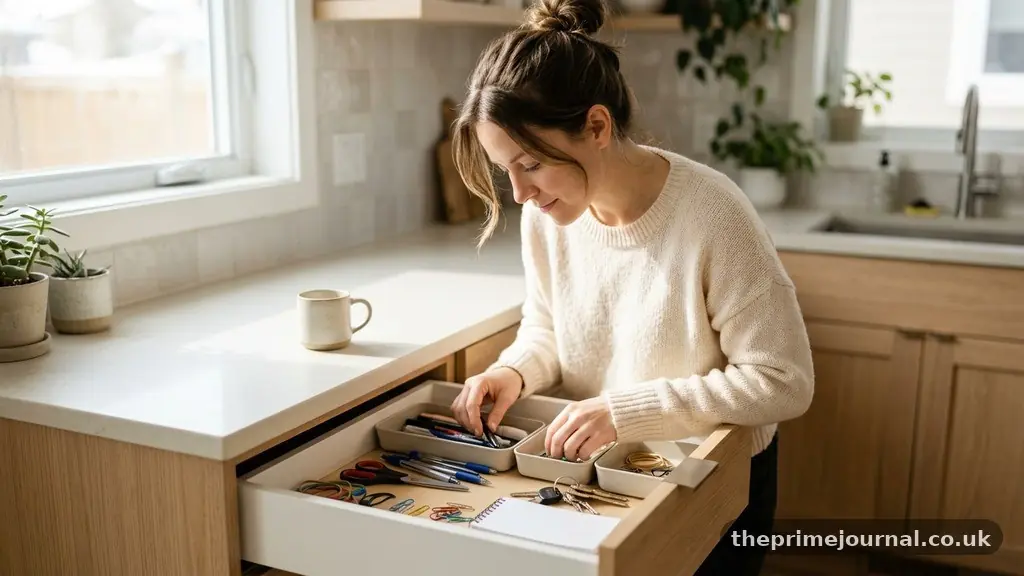
Decluttering Your Home Without Feeling Overwhelmed starts with making the job smaller, not forcing yourself to become a minimalist overnight. A calmer home can improve how easily you find things, rest, clean, and use your space, but the process works best when it fits your energy and real routines.
The most helpful approach is simple: choose one manageable area, use clear decisions, and stop before the task becomes exhausting. You’ll find practical ways to create a sorting system, handle sentimental items, dispose of unwanted belongings responsibly, and keep progress from disappearing a week later.
Start With One Small, Visible Win
The fastest way to reduce overwhelm is to avoid treating the whole house as one project. Pick a defined area that can be finished in one session, such as a bathroom drawer, one kitchen shelf, a bedside table, or the floor beside the front door.
A small win gives you visible evidence that change is possible. Clearing one crowded surface may take only 15 minutes, but it can make the room feel different immediately and show you which decisions are easiest for you.
Use the one-room-at-a-time method only as a broad sequence, not as an instruction to empty an entire room in one day. Within that room, work in contained zones so the project never becomes larger than your available attention.
Choose the right starting point
Start with an area that has low emotional pressure and high daily visibility. A junk drawer is usually easier than a box of family photographs, while an overfilled kitchen counter may offer more practical benefit than a hidden storage cupboard.
Avoid beginning with the most difficult room. If paperwork, clothing, or sentimental items already trigger decision fatigue, choose a simpler category first and build confidence before returning to it.
- A single drawer or cupboard shelf
- The entryway floor and shoe area
- Expired products in the bathroom
- One section of a wardrobe
- A kitchen counter or one appliance cupboard
Set a clear finish line before you begin. “I’ll clear the top two shelves” is measurable; “I’ll fix the kitchen” is so vague that it creates pressure before any work starts.
Use a short time limit
Try a 10- or 15-minute decluttering session with a timer, especially if you’re tired, busy, or unsure where to begin. When the timer ends, you may continue if you still have energy, but stopping is a valid result rather than a failure.
Keep a rubbish bag and a donation box nearby so every decision has somewhere to go. At the end, return useful items to their homes and remove the rubbish or donations from the work area before you stop.
Replace Big Decisions With a Simple Sorting System
A sorting system prevents each object from becoming a fresh debate. Use four categories: keep, donate, discard, and relocate. “Relocate” is useful because many homes feel cluttered not because they contain too much, but because items are sitting in the wrong place.
Place the categories in clearly marked boxes, bags, or areas of the floor. Don’t create ten categories at the beginning, because excessive sorting can turn a straightforward task into another source of overwhelm.
Ask practical questions rather than trying to predict your future self. Does this work, fit, support a current activity, or serve a clear purpose? If you discovered it in a shop today, would you choose to bring it home?
| Category | What belongs there | Next action |
|---|---|---|
| Keep | Useful, used, loved, or necessary items | Return to a defined home |
| Donate | Good-condition items someone else could use | Bag and schedule a drop-off |
| Discard | Broken, unsafe, expired, or unusable items | Use suitable rubbish removal or recycling |
| Relocate | Items that belong in another room | Move them after the current zone is sorted |
Decide with evidence
For clothing, check fit, comfort, condition, and how often you actually wear the item. A shirt that has stayed untouched through several seasons may be taking up valuable space even if it was expensive or once suited your style.
For kitchen tools, keep the items that match the way you cook now. Three nearly identical peelers, unused specialist gadgets, or containers without matching lids may be more frustrating than helpful.
For paperwork, separate action items from records. Put bills, forms, and appointments requiring attention in one clearly visible folder, while outdated instructions, duplicate receipts, and old leaflets can usually leave the home after appropriate checking.
Use a temporary decision box
Some belongings genuinely need more thought. Put uncertain items in a dated “maybe” box, record the date on the outside, and store it somewhere contained rather than allowing the box to spread across the room.
Review it after a defined period, such as 30 or 60 days. If you haven’t needed or remembered most of its contents, that information can make the final decision easier without forcing an emotional choice in the first session.
Work With Your Energy, Not Against It
Decluttering requires attention, movement, and repeated choices, so the task can feel much harder when you’re hungry, rushed, grieving, or already carrying a long list of responsibilities. Planning around your energy is not an excuse; it is a practical part of successful home organisation.
Choose a time when you can finish safely and leave the room functional. Someone with limited energy may sort while seated at a table, while a busy parent may use three short sessions across a week instead of attempting a weekend marathon.
Make the first pass easy. Remove obvious rubbish, expired products, empty packaging, and items that clearly belong elsewhere before making nuanced decisions about value or identity.
Reduce decision fatigue
Decision fatigue develops when too many choices arrive without a break. You can reduce it by using the same questions for each item, limiting the number of categories, and taking a pause after every 20 to 30 minutes.
Keep water nearby and avoid creating multiple unfinished piles. A room full of half-sorted objects can look worse than the original clutter, which may make you feel that your effort has failed even when many decisions have been made.
Use a visible progress marker. Take a photograph before starting, fill one donation bag, or clear one shelf completely so progress is measured by something concrete rather than by a vague feeling.
Make the task emotionally safe
Clutter can reflect health changes, financial stress, caregiving, a move, or a difficult period of life. You don’t need to criticise the past version of yourself to make better use of your home now.
If another household member owns the item, don’t decide for them unless it is unsafe or they have explicitly asked for help. Create a labelled review area instead, then agree on a calm time for the owner to make the final decisions.
It’s also fine to stop. A 12-minute session that leaves one drawer usable is more sustainable than a four-hour push followed by several weeks of avoidance.
Move Through Each Room With a Purpose
Different rooms create different kinds of clutter, so they need slightly different questions. The aim is not to make every room look identical; it is to make each space support the activities that happen there.
Entryway
Keep only the shoes, coats, bags, and everyday accessories that the household uses regularly near the entrance. A small tray for keys, hooks at an accessible height, and one basket for outgoing items can prevent the same clutter from returning to the floor.
Move seasonal coats and special-occasion footwear elsewhere. If the entryway is narrow, prioritise clear walking space over decorative storage, because an attractive organiser is not helpful if it makes movement harder.
Kitchen
Begin with counters, then move to one drawer or cupboard at a time. Remove duplicates, damaged utensils, expired food, and containers that have lost their lids, checking dates and food-safety guidance where relevant.
Store the tools you use daily within easy reach. Occasional baking equipment can live higher up or in a labelled cabinet, while appliances used only once a year should not occupy the most convenient counter space.
Bedroom and wardrobe
Separate everyday clothing from occasion wear, sportswear, sleepwear, and items needing repair. Try not to turn the bed into a permanent sorting station; once a category is decided, put it away or move it to its next destination.
A useful wardrobe should reflect your current body, lifestyle, climate, and preferences. Keeping a smaller number of comfortable outfits is not a failure of style, and donating clothes in good condition can help them serve someone else.
Living areas
Look at what gathers on floors, coffee tables, sofas, and media units. Create homes for remote controls, books, toys, chargers, and hobby materials based on where people actually use them, not where an idealised room would place them.
Use a basket for items that belong elsewhere, but empty it regularly. A relocation basket is a tool for finishing a session, not a new permanent storage category.
Handle Sentimental Items Without Rushing Yourself
Sentimental belongings often cause the strongest emotional response, which is why they should rarely be the first category you tackle. Decluttering is not a demand to prove that you love someone or remember an experience by keeping every physical object connected to it.
Start by gathering one narrow group, such as greeting cards, children’s artwork, or souvenirs from one trip. Seeing the whole category together can make duplicates easier to identify than sorting one item at a time from scattered drawers.
Keep the meaning, not always the object
Ask what the object represents and whether that meaning can be preserved in another form. A photograph of a bulky school project, a scanned letter, or a small selection from a larger collection may retain the memory while reducing physical storage.
Don’t photograph everything automatically. Digital files also need naming, backup, and occasional maintenance, so preserve the items that genuinely matter rather than creating a second form of clutter.
Choose a container for sentimental belongings and let its size provide a gentle boundary. When the container is full, select the pieces with the strongest personal significance instead of adding another unexamined box.
Use a slower process
Work for 10 minutes, then stop before the task becomes painful. Ask a trusted person to sit with you if you need emotional support, but make sure they understand that encouragement is more useful than pressure.
Some items can remain undecided for now. A clearly labelled memory box in a dry, safe location is better than forcing a decision during a period of grief or major change.
Choose Storage Solutions After You Sort
Storage can support a clutter-free home, but buying containers before reducing possessions often hides the problem. Sort first, measure the space second, and purchase organisers only when you know exactly what needs to fit there.
Good storage makes the preferred action easy. Open baskets may work for daily blankets, drawer dividers may help with small accessories, and transparent containers can make occasional supplies easier to identify.
Match storage to behaviour
If people drop mail on the counter, a narrow incoming-paper tray near the entrance may work better than a filing cabinet in another room. If toys repeatedly spread across the living room, an open basket that a child can use independently may be more practical than a lidded box.
Keep frequently used items between waist and shoulder height when possible. Reserve high shelves and deep cupboards for seasonal or occasional belongings, and label them if the contents are not obvious.
Leave some empty space. A shelf packed to its limit becomes difficult to maintain because one item must be removed before another can be returned.
Don’t organise items you don’t want
Before buying matching containers, remove broken items, duplicates, and possessions that no longer serve your household. Attractive storage is not a solution for objects that are already making the room harder to use.
Measure shelves, cupboards, and door clearances before purchasing anything. A box that is technically the right width may still be impractical if it blocks hinges, catches on a drawer, or is too heavy to lift when full.
Minimalism is optional. The goal is not to own as little as possible; it is to keep what supports your life and arrange it so that you can find, use, and put it away without unnecessary effort.
Dispose of Unwanted Items Responsibly
Decluttering is not finished when unwanted possessions are placed in a hallway. The final step is giving each item an appropriate destination so donation bags, recycling piles, and rubbish don’t become a new source of household clutter.
Separate donations from genuine rubbish. Donation centres generally need clean, usable goods, while stained textiles, broken appliances, unsafe products, and heavily damaged furniture may require a different disposal route.
Check local rules for batteries, paint, medication, electronics, confidential documents, and large furniture. Requirements differ by location, and some materials should never go into ordinary household bins.
Create a departure schedule
Set a realistic deadline for leaving the house. For example, put the donation bag in your car after the session or schedule a visit to a local donation centre within the next few days.
If a large item is unsafe to move or cannot be donated, arrange appropriate rubbish removal rather than leaving it beside a public bin. For paper, clothing, and electronics, look for local recycling or reuse options that accept those specific materials.
The U.S. Environmental Protection Agency’s recycling resources explain why reducing and reusing items should come before disposal and provide useful background for responsible waste decisions. If you live elsewhere, use your local authority’s guidance for precise collection rules.
Keep disposal sustainable
Try not to send usable items to landfill simply because you want the room clear immediately. Reuse, repair, gifting, resale, and community exchange can extend an item’s life, although convenience and safety still matter.
Don’t let sustainability become another form of perfectionism. If an item is unhygienic, dangerous, or impossible to pass on responsibly, disposing of it properly is better than storing it indefinitely out of guilt.
Keep Progress From Turning Into Another Chore
A home stays calmer when the return journey is easy. Give everyday objects a specific home, and make that home close enough to where the object is used that putting it away requires very little effort.
Use a five-minute reset at a natural point in the day, such as before dinner or before bed. Put away visible items, collect rubbish, return dishes, and place anything homeless in a temporary basket for later sorting.
Choose a weekly maintenance zone rather than trying to inspect the entire house. One week might focus on the mail tray, while the next checks the bathroom shelf or children’s school supplies.
Prevent new clutter
Pause before bringing something home and ask where it will live. If the answer is “somewhere in a cupboard,” wait until you can identify the exact space or decide which existing item it will replace.
Use a one-in, one-out rule selectively for categories that expand quickly, such as mugs, coats, toys, or books. It is not a strict law, but it creates a useful boundary when storage is limited.
Unsubscribe from promotional emails, avoid keeping duplicate shopping bags, and return borrowed items promptly. Small changes at the entry point can prevent many objects from becoming permanent residents.
Measure function, not perfection
Ask whether you can find what you need, clean the surfaces you use, and move through the rooms safely. Those are stronger measures of success than matching containers or having a home that looks untouched.
Expect clutter to return during busy seasons, illness, holidays, or household changes. A maintenance reset is normal, and the work becomes easier when every item already has a known category and destination.
Frequently Asked Questions
What should I declutter first?
Start with a small, low-emotion area that you see every day, such as one drawer, counter, or bathroom shelf. Clear rubbish and obvious duplicates first so you can experience progress without making difficult sentimental decisions.
How long should a decluttering session last?
There is no required duration, but 10 to 20 minutes is a useful starting point for people who feel overwhelmed. Stop while you still have enough energy to finish the immediate sorting and remove the bags from the room.
What if my family doesn’t want to declutter?
Focus on shared spaces and your own belongings rather than forcing decisions about another person’s possessions. Explain the practical benefit, agree on one small area, and give each person control over items that belong to them.
Should I throw away sentimental items?
Not necessarily. Keep the belongings that carry genuine meaning, consider photographing bulky objects, and use a defined memory box to create a comfortable physical limit.
How do I stop clutter coming back?
Give frequently used items convenient homes, limit unnecessary purchases, and use a short daily reset. Schedule a small weekly review so minor buildup is handled before it becomes an exhausting project.
Make the Next Step Small Enough to Begin
Decluttering Your Home Without Feeling Overwhelmed becomes manageable when you stop measuring success by the whole house. Choose one visible zone, sort with clear keep, donate, discard, and relocate categories, then finish by moving unwanted items toward their proper destination.
Start with 10 minutes today and leave yourself a clear stopping point. A calmer home grows through repeatable decisions, practical storage, and kindness toward the life that created the clutter in the first place.