Preparing your home for guests without last-minute stress starts long before the doorbell rings. A calm visit usually comes from a few small systems: a realistic cleaning schedule, a comfortable place to sleep, clear plans for meals, and a short home maintenance checklist. Rather than trying to make every room perfect, focus on what guests will use and what will make them feel welcome.
The most helpful approach to preparing Your Home for Guests Without Last-Minute Stress is to divide the work across several days. You’ll protect your energy, notice practical problems early, and have time to add personal touches that no rushed shopping trip can provide.
Start With a Simple Guest Plan
The first step is to confirm who is coming, how long they’ll stay, and what they’ll need. A single overnight guest may require fresh bed linens and extra towels, while a family visiting for a week may need storage space, breakfast supplies, child-safe arrangements, and access to laundry.
Write down the arrival date, sleeping arrangements, dietary restrictions, allergies, transportation details, and any mobility concerns. This information prevents avoidable surprises, such as discovering that a guest with a severe pet allergy will sleep beside the room where the dog spends most of the day.
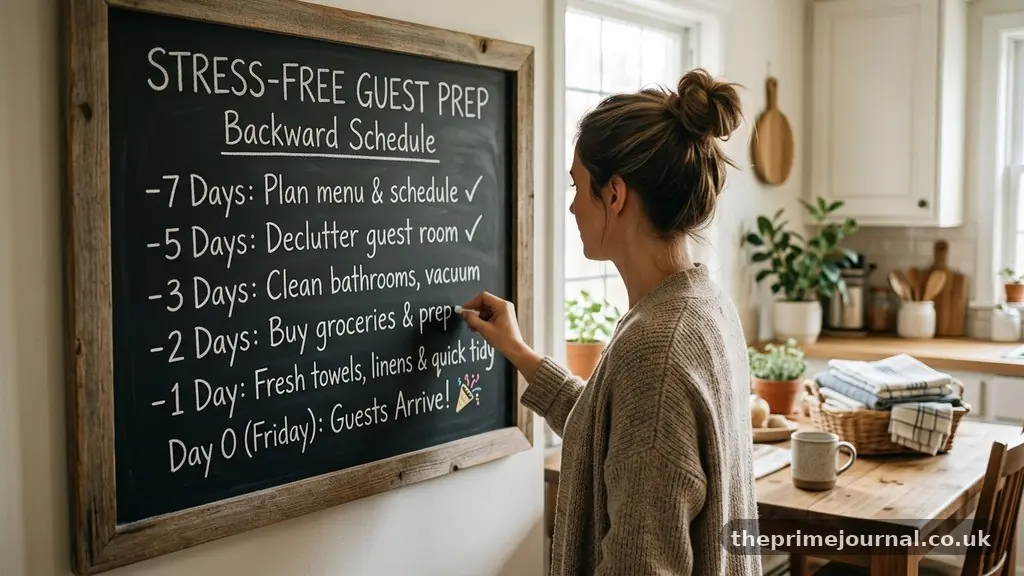
Use a backward schedule
Work backward from arrival instead of treating the day before as one giant cleaning deadline. Ten to fourteen days ahead, handle repairs and decluttering; about a week ahead, plan meals and buy supplies; two or three days ahead, wash linens and complete deeper cleaning.
A short schedule also makes it easier to ask for help. One person can handle grocery shopping, another can change the bedding, and older children can clear shoes or toys from hallways.
| Timing | Best tasks | Why it helps |
|---|---|---|
| 10–14 days before | Confirm needs, inspect rooms, schedule repairs | Leaves time for solutions if something is broken or missing |
| 7 days before | Declutter, plan meals, create a grocery shopping list | Reduces errands and prevents forgotten essentials |
| 2–3 days before | Wash linens, clean bathrooms, prepare guest supplies | Keeps fresh work from becoming stale or rushed |
| Arrival day | Ventilate rooms, set out towels, tidy visible surfaces | Creates a welcoming finish without exhausting you |
Keep the plan visible on a phone note, calendar, or sheet of paper on the refrigerator. A list that can be checked off is more useful than a vague intention to “get the house ready.”
Clean Strategically, Not Exhaustively
Guests notice cleanliness most in the rooms they use closely: the bathroom, bedroom, kitchen, entryway, and sitting area. You don’t need to scrub the back of every cupboard if the guest bathroom is fresh, the floors are free of debris, and the surfaces your visitors touch are clean.
Build a home cleaning checklist around high-impact tasks. Dust bedside tables and lamps, vacuum under the bed, wipe light switches and door handles, empty wastebaskets, clean mirrors, and remove visible hair from bathroom floors and drains.
Prioritise by visibility and use
Start with the entrance because it shapes the first impression. Clear coats and shoes, sweep the threshold, check that outdoor lighting works, and leave a practical place for guests to put bags.
Next, focus on the bathroom. Clean the toilet, basin, shower or bath, taps, mirror, and floor, then check that the extractor fan or window provides enough ventilation.
The kitchen deserves attention even if guests won’t cook. Wipe counters, clean the sink, empty old food from the refrigerator, and make space for anything visitors may bring with them.
- Vacuum or sweep guest pathways and sleeping areas.
- Dust visible shelves, lamps, headboards, and window ledges.
- Disinfect frequently touched handles and switches.
- Remove full bins and replace their liners.
- Check for unpleasant odours, damp spots, or pet hair.
- Wash or replace heavily used bath mats and hand towels.
Decluttering before guests arrive is often more valuable than adding decoration. Remove piles of mail, unused exercise equipment, empty boxes, and personal items that have spread into the guest area.
Don’t hide clutter in a cupboard guests may need to use. A crowded wardrobe or bathroom cabinet makes visitors feel as if they’re intruding, even if the rest of the room is spotless.
Make the Guest Room Feel Ready
Guest room preparation should centre on sleep, storage, temperature, and access to useful items. Strip the bed, wash the mattress protector if needed, and put on fresh bed linens that are comfortable for the season.
Offer at least one pillow with a different firmness if you have it, and place an extra blanket where guests can reach it without searching through drawers. A small bedside lamp is more helpful than a decorative object that takes up the only usable surface.
Create breathing room
Guest bedroom organization doesn’t require expensive furniture. Clear part of a wardrobe, leave several empty hangers, provide a luggage stand or stable chair, and open a drawer for smaller belongings.
Keep cables, books, and chargers from taking over the bedside table. If the room has no convenient outlet, a safe extension arrangement or accessible charging point can prevent guests from crawling behind furniture at night.
Set the room’s temperature before arrival, but don’t assume everyone prefers the same environment. Explain how to use the heater, fan, blinds, and windows so visitors can adjust the space themselves.
Privacy matters as much as appearance. Check that curtains close fully, the bedroom door latches, and guests can move from the room to the bathroom without stepping over household clutter.
Assemble overnight supplies
Overnight guest supplies can sit in a basket or tray, making them easy to find without turning the room into a hotel. Useful choices include tissues, bottled or filtered water, a spare phone charger, earplugs, a small rubbish bin, and basic toiletries.
Don’t stock products that may trigger sensitivities unless you know they are suitable. Unscented detergent, fragrance-free soap, and clean ventilation support allergy-friendly accommodations better than strong air fresheners.
Place extra towels on the bed or bathroom shelf rather than making guests ask for them. Include a bath towel, hand towel, and washcloth if those are customary in your household.
Prepare the Bathroom and Shared Spaces
Guest bathroom essentials should be visible, clean, and simple to use. Provide toilet paper on the holder plus at least one spare roll, hand soap, a clean hand towel, a plunger, and a wastebasket with a liner.
Check the water temperature and pressure before guests arrive. A slow drain, loose toilet seat, dripping tap, or confusing shower controls is much easier to fix on a quiet afternoon than after someone has already unpacked.
Clear a small section of the counter for toiletries. If every surface is covered with household products, move extras into a cabinet and label anything a visitor may need, such as a hair dryer or first-aid supplies.
Make shared rooms easy to use
In the living room, remove fragile objects from crowded coffee tables and create an obvious place for drinks. Check remote controls, lamps, and charging outlets so guests aren’t left guessing how to switch things on.
In the kitchen, identify drinking glasses, mugs, cutlery, and basic breakfast items. If guests are welcome to help themselves, say so plainly and explain which cupboards, shelves, or refrigerator areas they may use.
Keep household routines visible but relaxed. A note about recycling, Wi-Fi access, heating controls, or quiet hours can prevent awkward questions, especially when people are staying in your home for the first time.
Housewarming and hosting tips often focus on attractive details, but practical directions create more comfort. A handwritten note with the Wi-Fi name, bathroom location, and emergency contact information may be more appreciated than a decorative welcome sign.
Plan Food Without Overcommitting
Meal planning for guests should account for the whole visit rather than only the main dinner. Decide which meals you’ll cook, which can be assembled quickly, and when everyone might eat separately because of work, travel, or different sleep schedules.
Ask about allergies, vegetarian or vegan preferences, religious restrictions, dislikes, and breakfast habits before shopping. A guest who avoids dairy may need more than a dairy-free dinner if the available coffee creamer, bread, snacks, and dessert all contain milk.
Build a flexible shopping list
Start your grocery shopping list with reliable basics: breakfast food, fruit, drinks, snacks, coffee or tea, and ingredients for one simple meal. Add a few foods that require little preparation, such as soup, eggs, pasta, rice, or prewashed salad.
Buy perishables close enough to the visit that they remain fresh, but don’t leave every purchase until arrival day. Shelf-stable items, beverages, paper goods, and freezer food can be purchased earlier.
Use labels or a quick explanation if the kitchen has a particular system. Guests may hesitate to open cupboards or take the last portion of something unless you tell them that the food is available for everyone.
Keep a backup meal for the first evening. Travel delays happen, and a dish that can be reheated prevents a late arrival from turning into a stressful restaurant search.
Food safety also belongs in the hosting plan. Keep cold foods refrigerated, separate raw meat from ready-to-eat ingredients, and follow the USDA’s safe food handling recommendations for storage and preparation.
Finish Repairs and Safety Checks Early
A home maintenance checklist catches problems that ordinary cleaning won’t solve. Walk through the guest route and test lights, door locks, smoke alarms, heating controls, hot water, Wi-Fi, and any steps or handrails visitors will use.
Replace dead batteries in smoke or carbon monoxide alarms according to the manufacturer’s instructions, and keep a working flashlight where it can be found. If the house has a complicated alarm system, explain it before bedtime rather than waiting for an accidental beep.
Look for small hazards
Secure loose rugs, move cables away from walking paths, and remove unstable stools or wobbly chairs from guest areas. These details are particularly important for older visitors, young children, and anyone with limited mobility.
Check the front door, spare key, and outdoor lighting. A guest arriving after dark should be able to identify the entrance, unlock it without a struggle, and reach the bedroom without navigating a dim hallway.
Pet arrangements deserve a direct decision. If animals won’t enter the guest room, clean hair from the space, keep bedding away from pet bedding, and tell visitors where the animals will be during their stay.
Keep medicines, cleaning chemicals, sharp tools, and valuable documents out of accessible guest areas. You don’t need to make the whole house sterile; you do need to remove hazards from places visitors are likely to explore.
Use the Final Day for Comfort, Not Deep Cleaning
The day before arrival should be for finishing touches rather than major projects. Wash the last towels, empty the dishwasher, take out rubbish, refill soap dispensers, and check that the guest room still looks as welcoming as it did after cleaning.
Ventilate rooms briefly if weather allows, then close windows and adjust the temperature. Avoid spraying heavy fragrance throughout the house because strong scents can cause headaches or worsen allergies.
Set out guest comfort essentials where they are easy to spot. These might include water, towels, Wi-Fi details, a reading light, a place for keys, and a small snack for someone arriving hungry.
Keep your own routine intact
Hosting feels calmer when your household has not been pushed into exhaustion. Eat a proper meal, leave time to shower and change, and stop cleaning when the important areas are ready.
Guests generally remember whether they felt relaxed, not whether every skirting board was dust-free. A host who can sit down and enjoy the conversation creates a warmer atmosphere than one who keeps apologising for minor imperfections.
Prepare a short arrival script if you tend to forget practical information under pressure. Show the bathroom, sleeping area, Wi-Fi details, kitchen basics, and emergency exits, then let guests settle in at their own pace.
After the first welcome, give visitors a little privacy. Some will want to talk immediately; others may need a shower, a snack, or twenty quiet minutes after travelling.
Make Hosting Easier for Future Visits
After guests leave, note what worked and what caused friction. You may discover that the bedroom needs another lamp, the bathroom needs a larger towel hook, or the kitchen lacks a convenient place for visitors to store breakfast food.
Store guest items together in one labelled container. Extra towels, travel-size toiletries, spare chargers, stain remover, tissues, and unused bedding are easier to manage when they are not scattered across three cupboards.
Turn experience into a repeatable system
Keep a reusable cleaning schedule with tasks divided into “two weeks before,” “week before,” “day before,” and “arrival day.” Adapt it for the type of visit rather than starting from a blank page each time.
Save common meal ideas and allergy information in a private note, especially if relatives or friends visit regularly. That record can prevent repeated questions while still allowing you to confirm that preferences have not changed.
Review supplies after each stay instead of waiting until the next invitation. Replace empty soap, note missing pillowcases, and add useful observations while the details are still fresh.
The long-term goal of preparing Your Home for Guests Without Last-Minute Stress is not a permanently perfect house. It’s a practical home that can shift into guest mode through a familiar sequence of small, manageable actions.
Frequently Asked Questions
How far in advance should I start preparing my home?
Start about one to two weeks ahead for an overnight visit, especially if repairs, shopping, or decluttering are involved. Begin earlier for larger groups, guests with accessibility needs, or stays that require several special meals.
What should I provide in a guest bedroom?
Provide clean bedding, comfortable pillows, extra blankets, towels, a lamp, an accessible outlet, a rubbish bin, and some empty storage space. Water, tissues, Wi-Fi details, and a spare charger add practical comfort without creating clutter.
How can I prepare for guests with allergies?
Ask about specific triggers before they arrive, then focus on clean linens, low-fragrance products, thorough vacuuming, and keeping pets away from the sleeping area. Don’t promise an allergen-free home unless you can genuinely provide that level of control.
What should I clean first when time is limited?
Clean the bathroom, guest bed, entryway, kitchen counters, and the routes between those areas first. Remove rubbish, deal with odours, and clear visible clutter before spending time on low-visibility tasks.
How do I avoid overplanning meals?
Plan one dependable meal for each main day, add easy breakfast and snack options, and keep a flexible backup dish available. Confirm dietary needs, then give guests permission to help themselves to clearly identified food.
Make the Welcome Feel Easy
Preparing Your Home for Guests Without Last-Minute Stress comes down to timing, priorities, and thoughtful practical details. Start with the guest’s actual needs, complete repairs early, and use a cleaning schedule that protects your energy instead of consuming it.
Fresh linens, a clear bathroom, simple food, safe pathways, and a calm welcome are enough to make most visits feel special. Once you’ve refined your checklist, future hosting becomes less of a scramble and more of an enjoyable part of sharing your home.